HR & assets
From hiring and the employee file to daily attendance, leave and payslips under Iranian rules — and a file for every asset with custodian, calibration and depreciation.
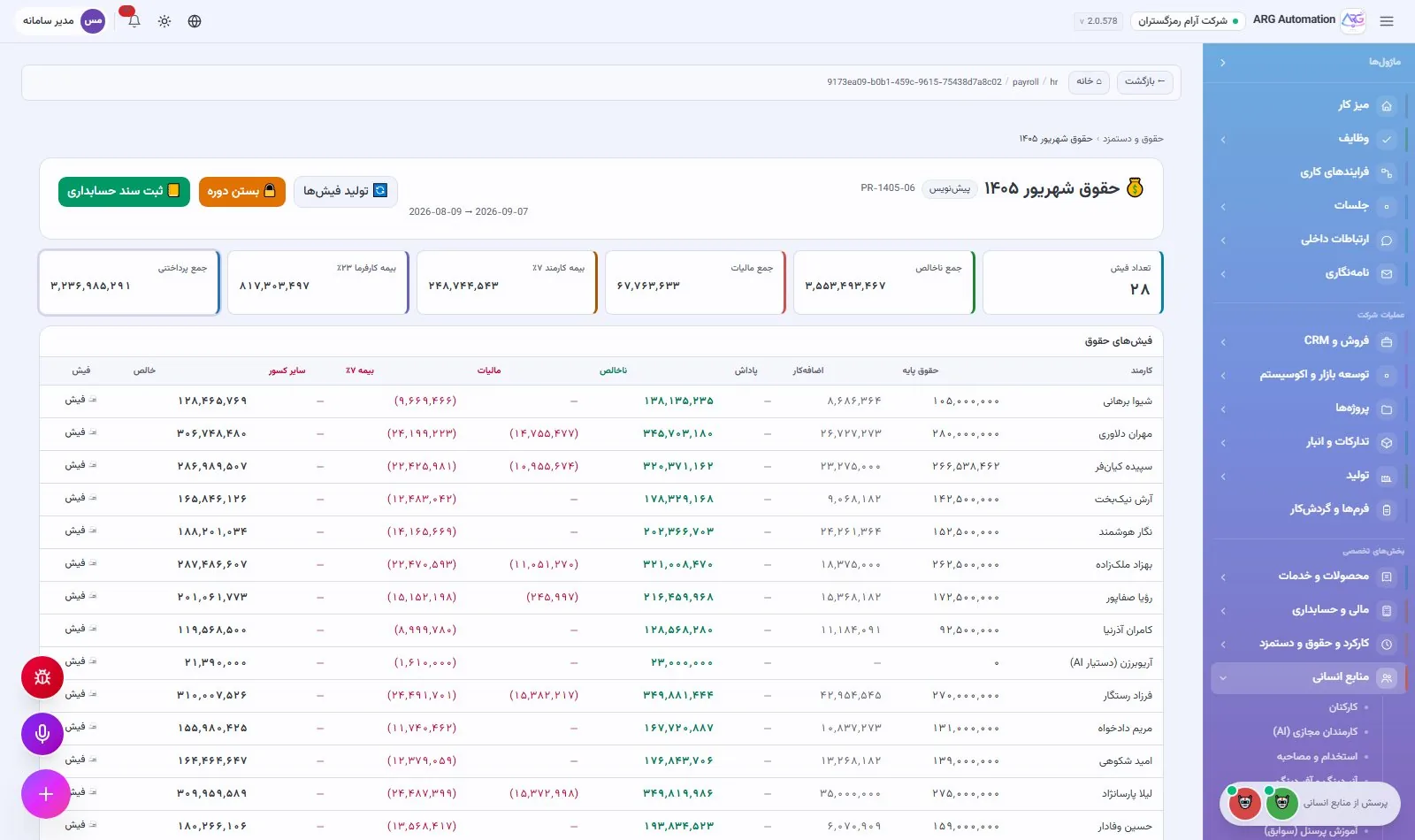
HR, attendance and payroll
From designing the organisation and recruiting to daily attendance, leave, business trips and the monthly payslip, the whole HR cycle happens in one place. Employees clock in and out, submit requests and see their payslips themselves, and the HR team spends its time on decisions instead of manual work.
Organisation structure
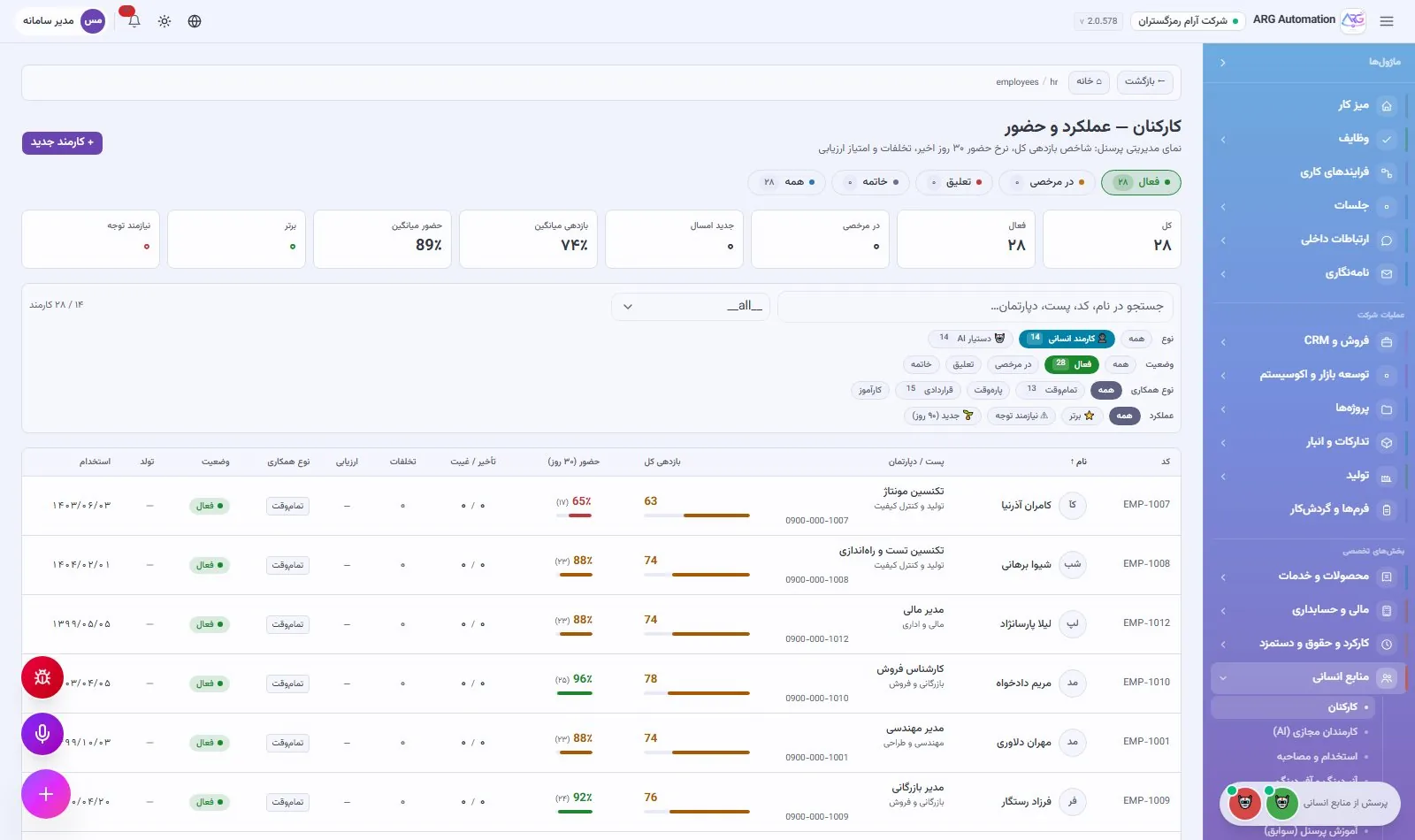
HR works on the structure described in the chapter “Designing the organisation structure”: departments, positions with job descriptions, and the org chart. Each employee holds a position and their access in the system comes from that position.
The employee file and the hiring cycle
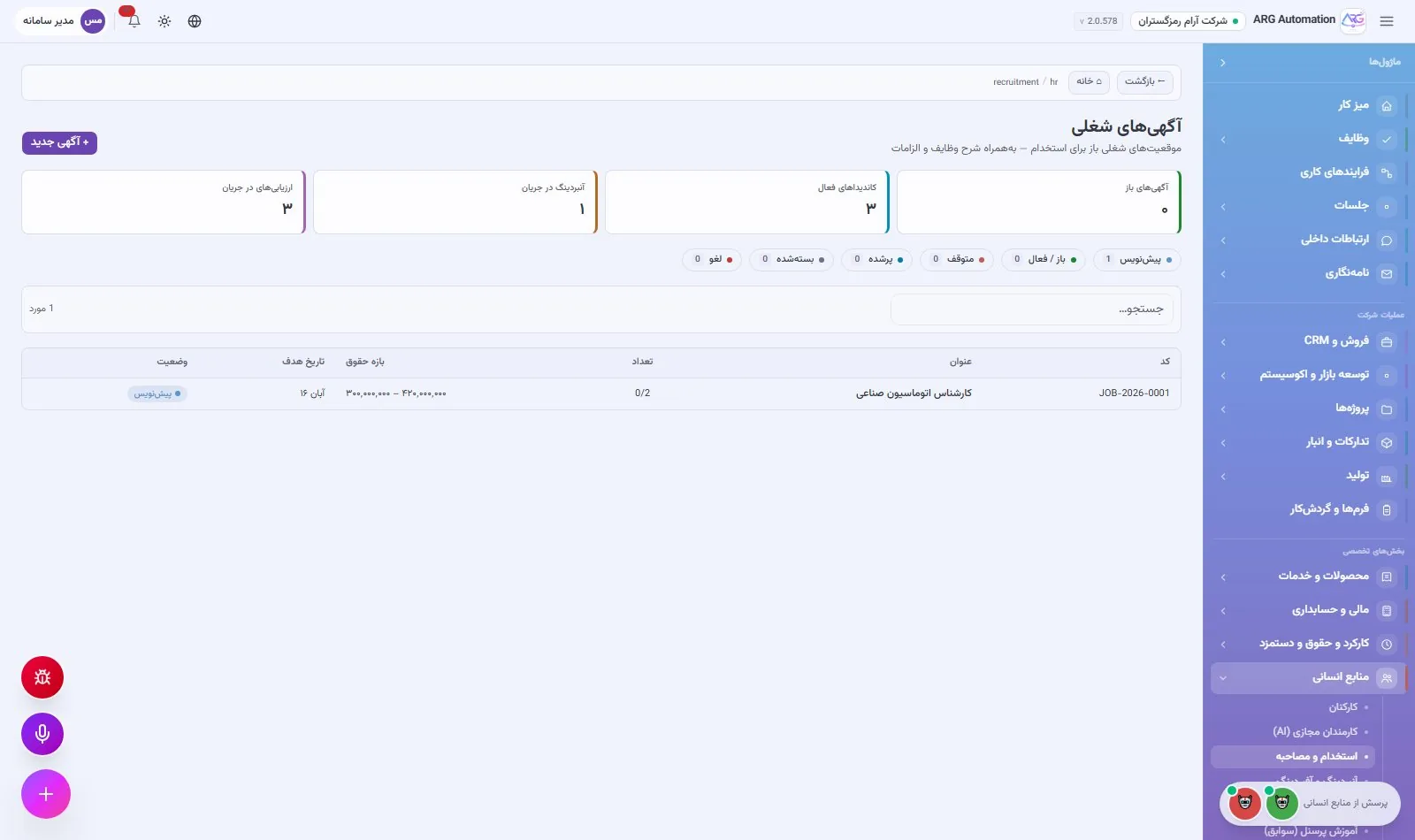
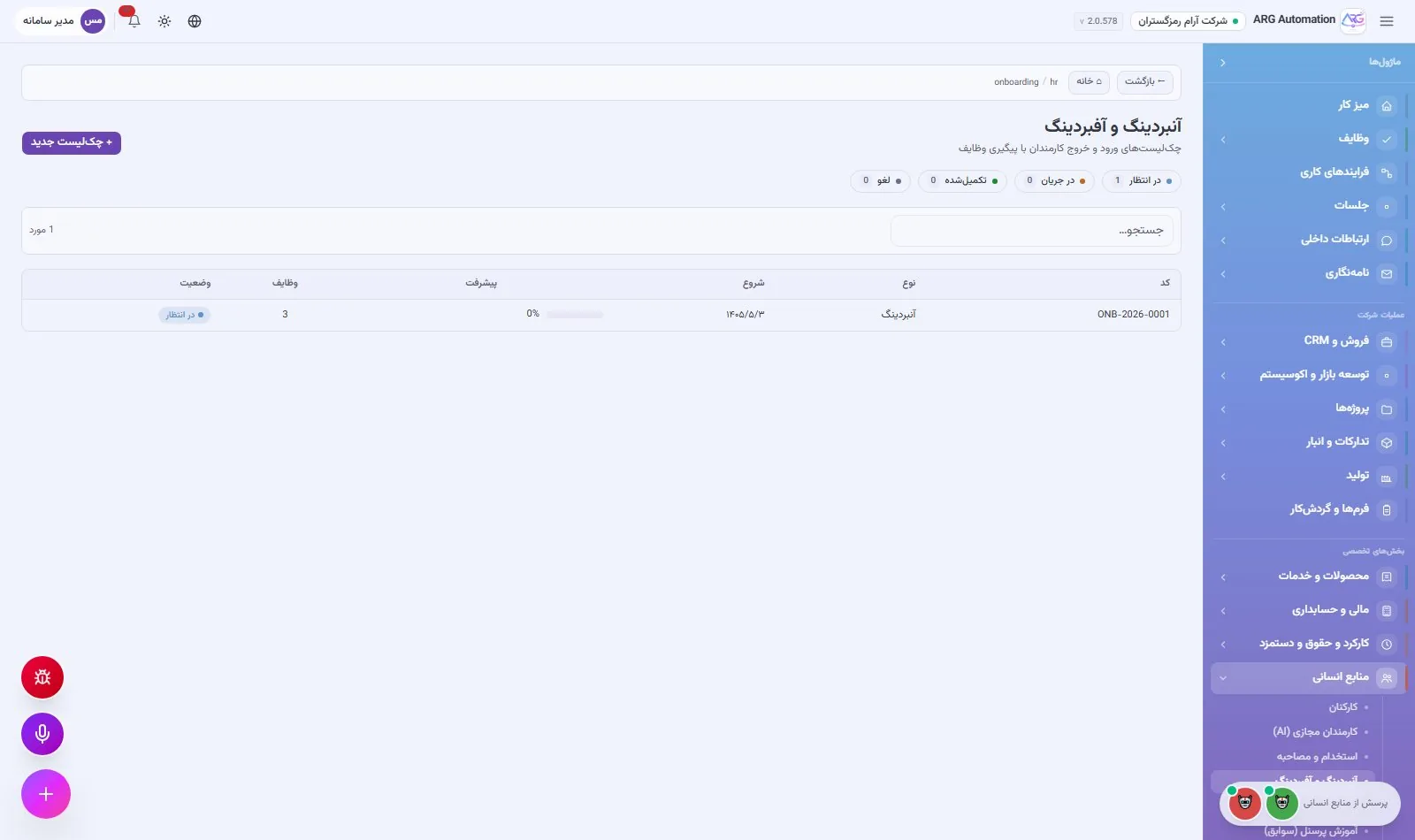
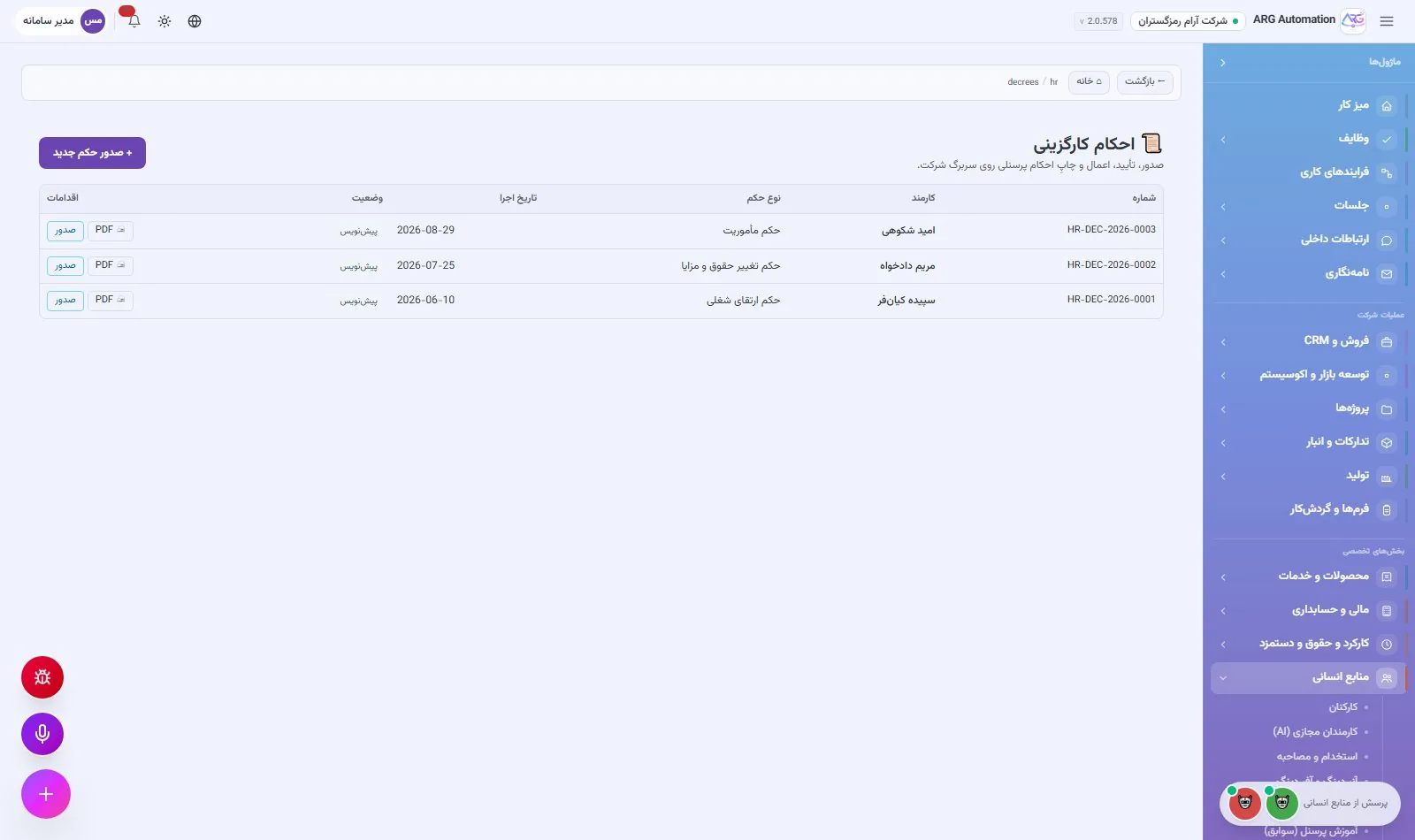
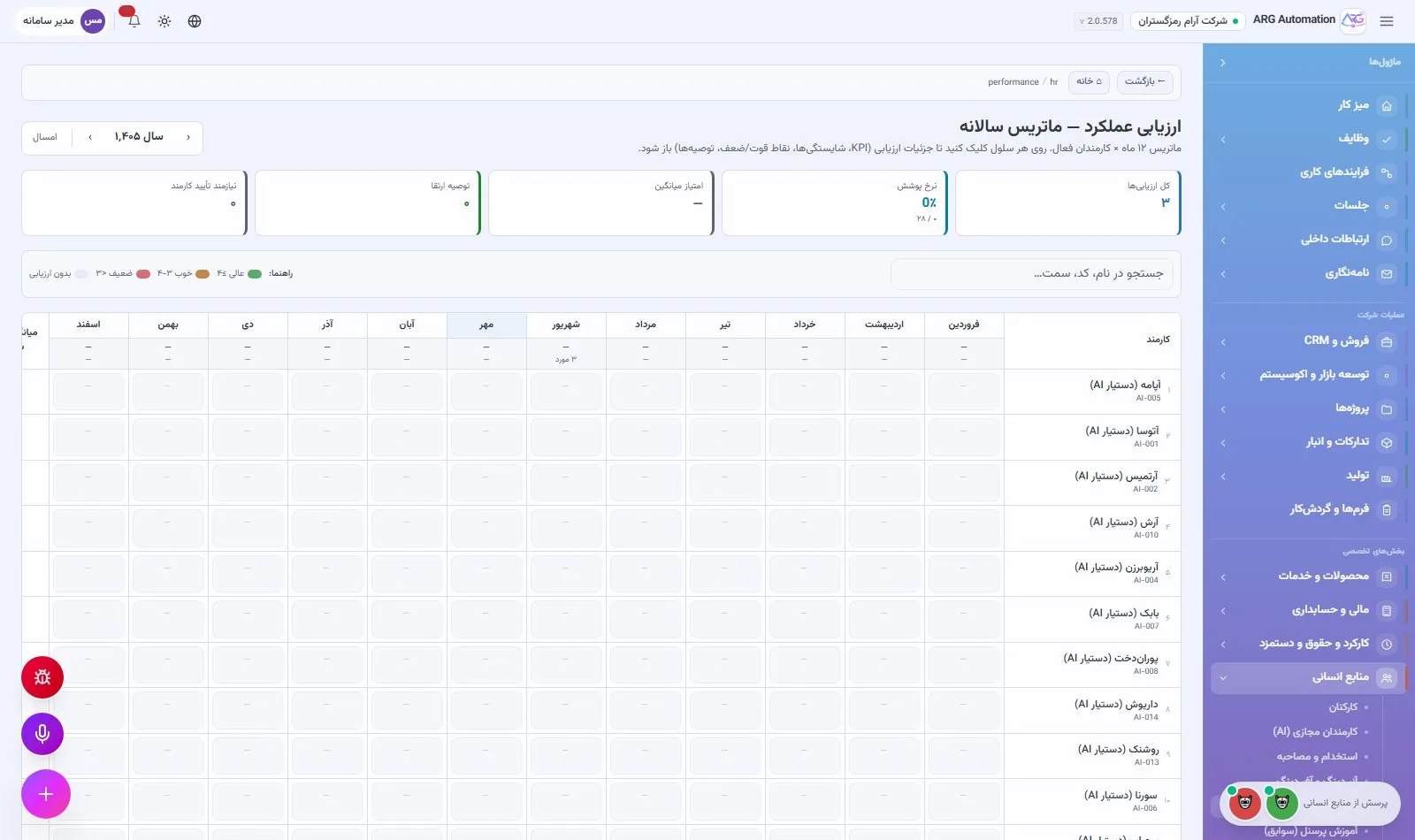
Each employee’s file holds personal details, position, pay structure, history and personnel decrees. Hiring starts with a job posting and each candidate moves through twelve stages to being hired. After that the onboarding programme runs, and on departure the offboarding programme. Performance reviews have eight stages and close with the employee’s own acknowledgement.
Location-aware attendance
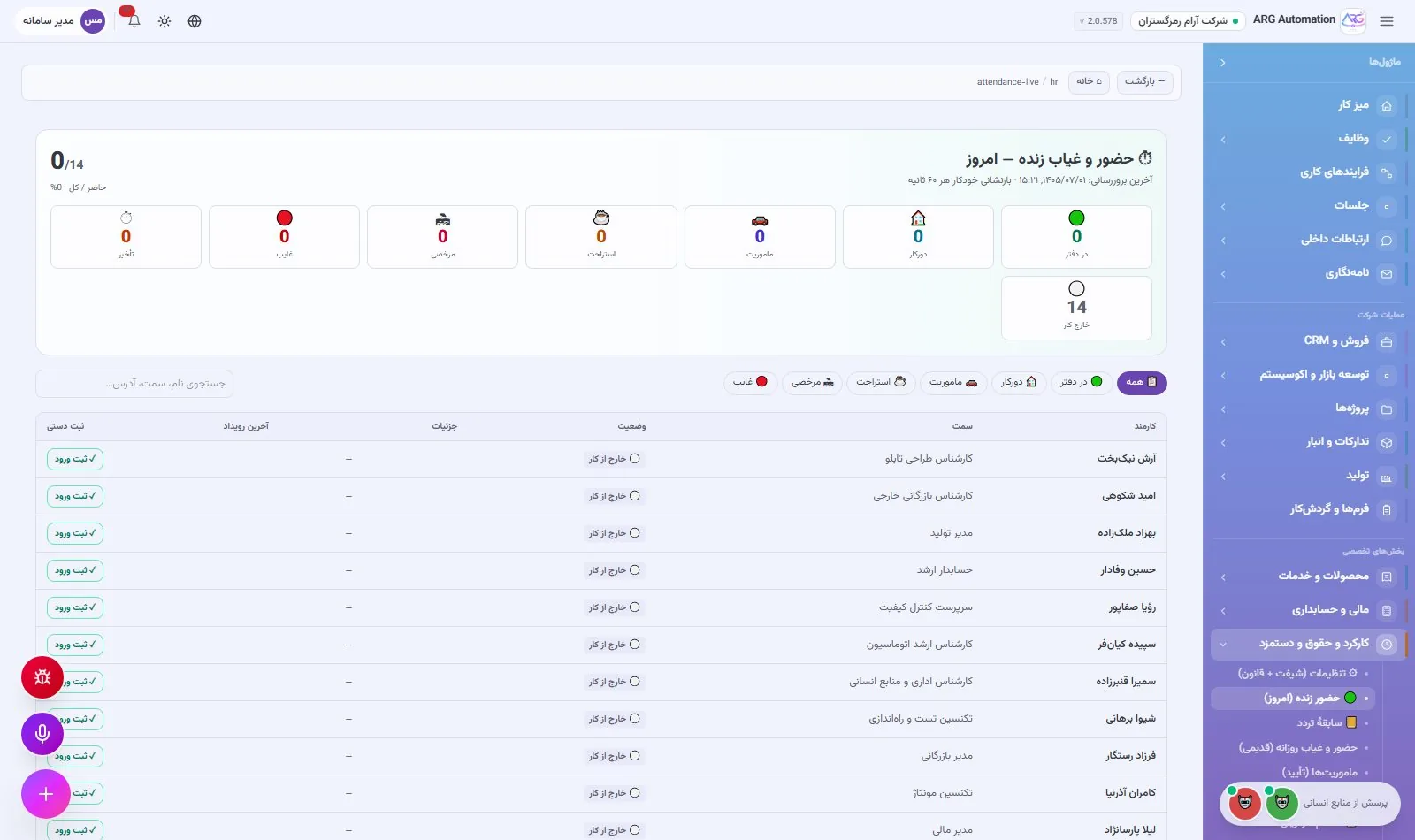
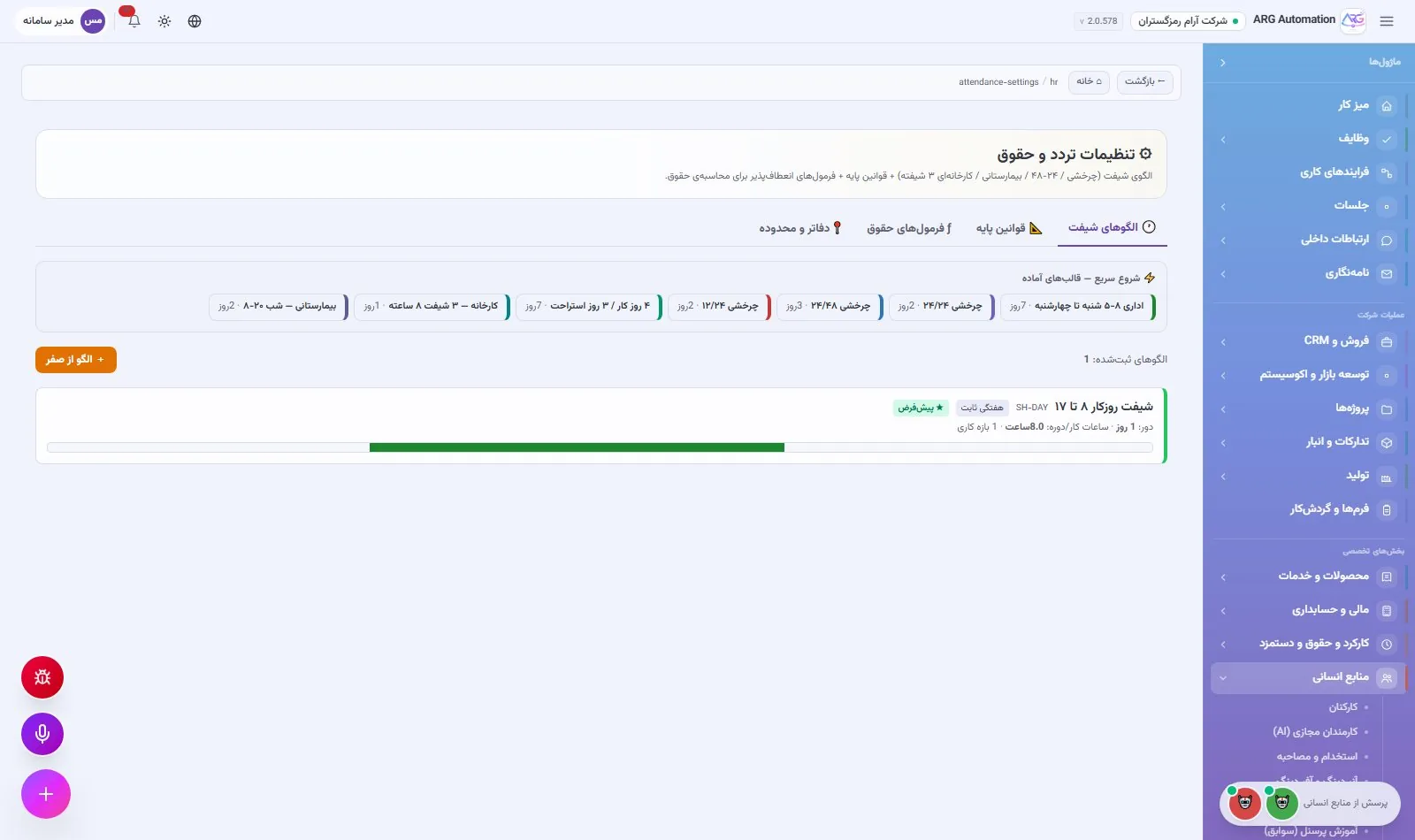
Employees clock in and out on a phone or computer. The system matches the location of each entry against the geographic boundary of the organisation’s offices. Working days, lateness (with a grace period), early departure and overtime are calculated automatically. Clock-in and clock-out reminders and an automatic end-of-day clock-out prevent incomplete records, and the “Live attendance” page shows who is in the office, on a business trip or on leave right now.
Leave and business trips
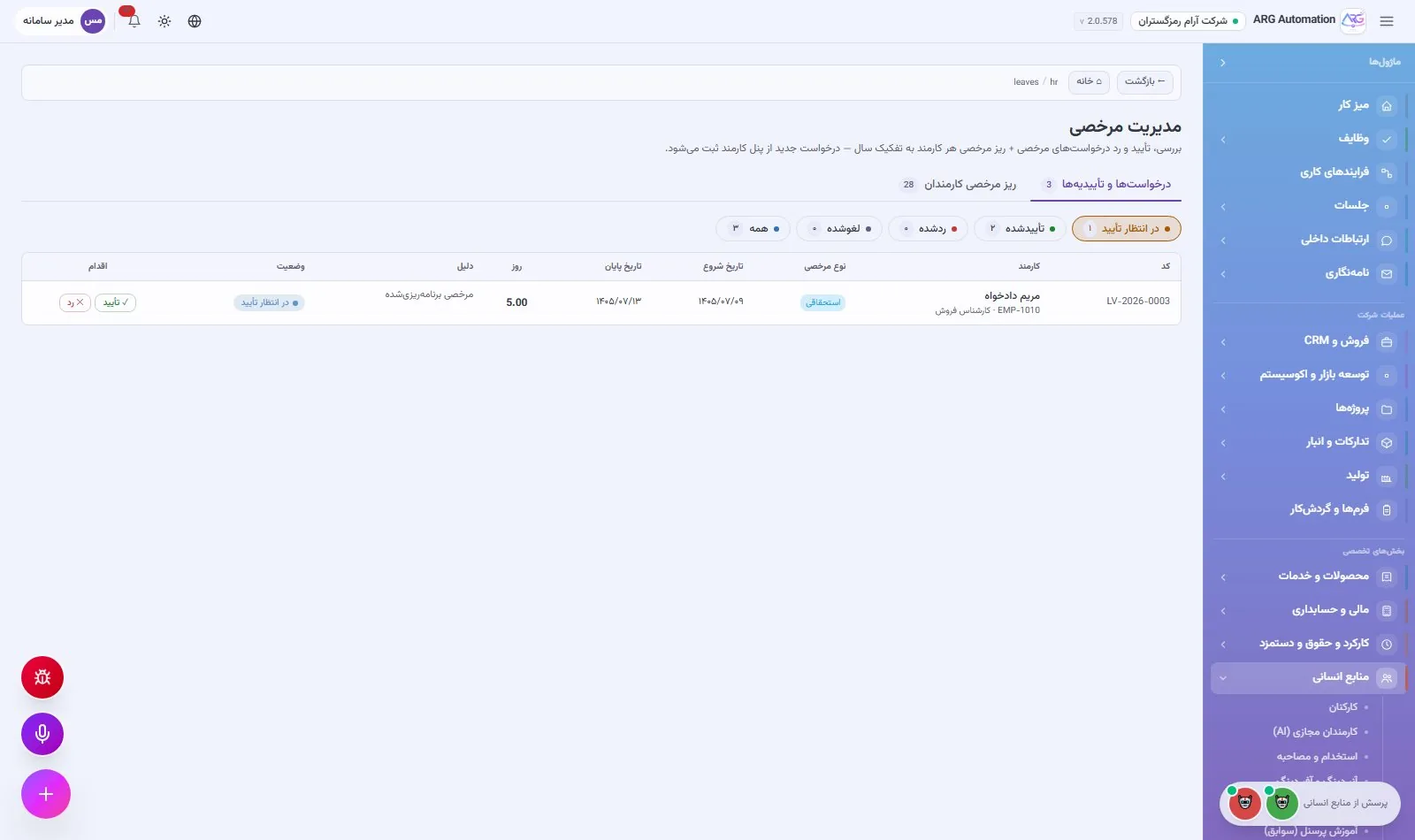
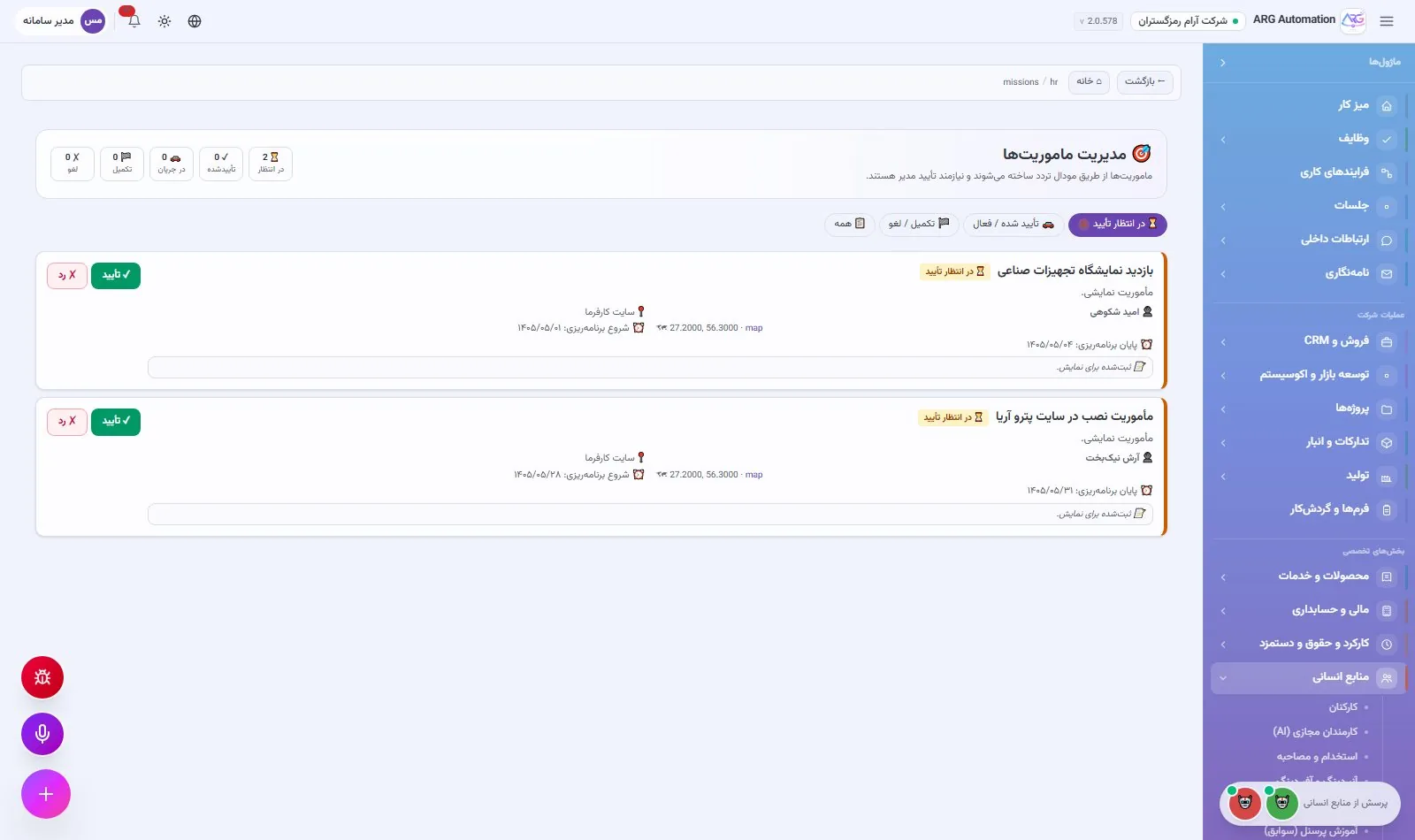
Leave requests, including half-day leave, go through an approval flow and once approved are placed automatically in the employee’s attendance calendar. A request cannot be rejected without a reason. Business trips are recorded and approved with a destination and a geographic radius, so attendance at the trip location is accepted as well.
Payroll
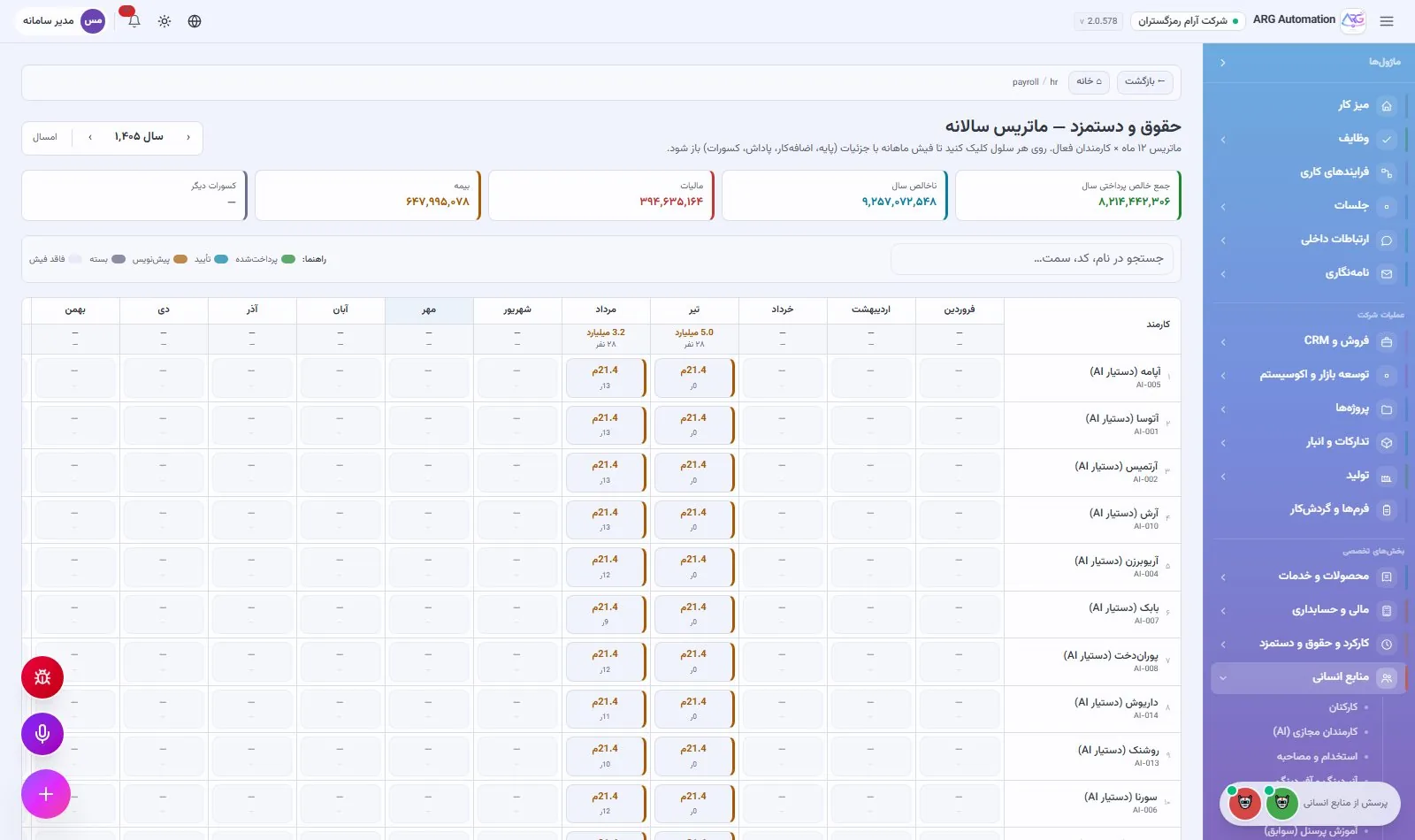
The payroll engine is built for Iranian rules: progressive income tax, social insurance, benefits and three kinds of overtime. For each monthly period, payslips for all employees are produced with a full breakdown in Persian. Each employee sees their own payslip in the system and can download it as a PDF.
Assets and equipment
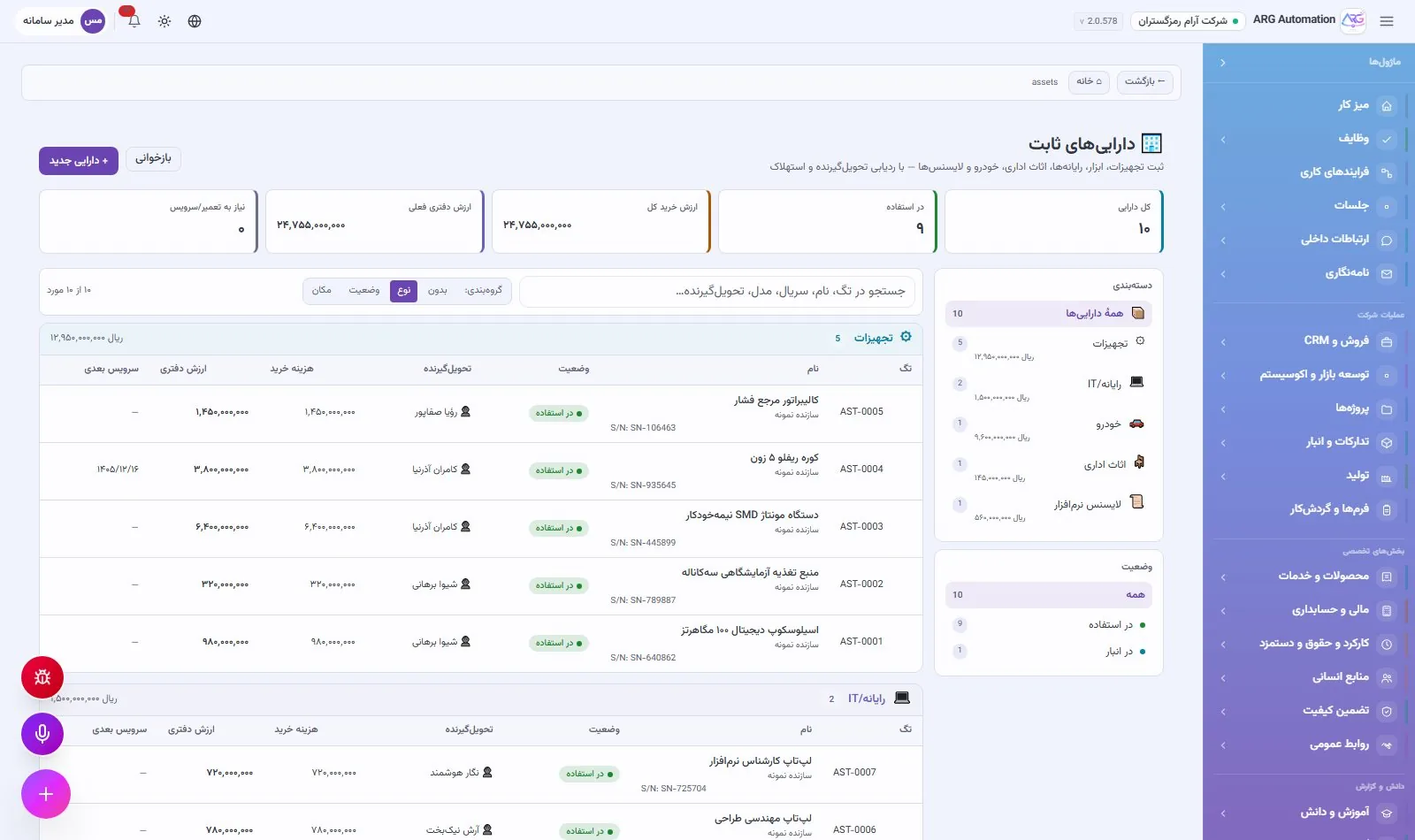
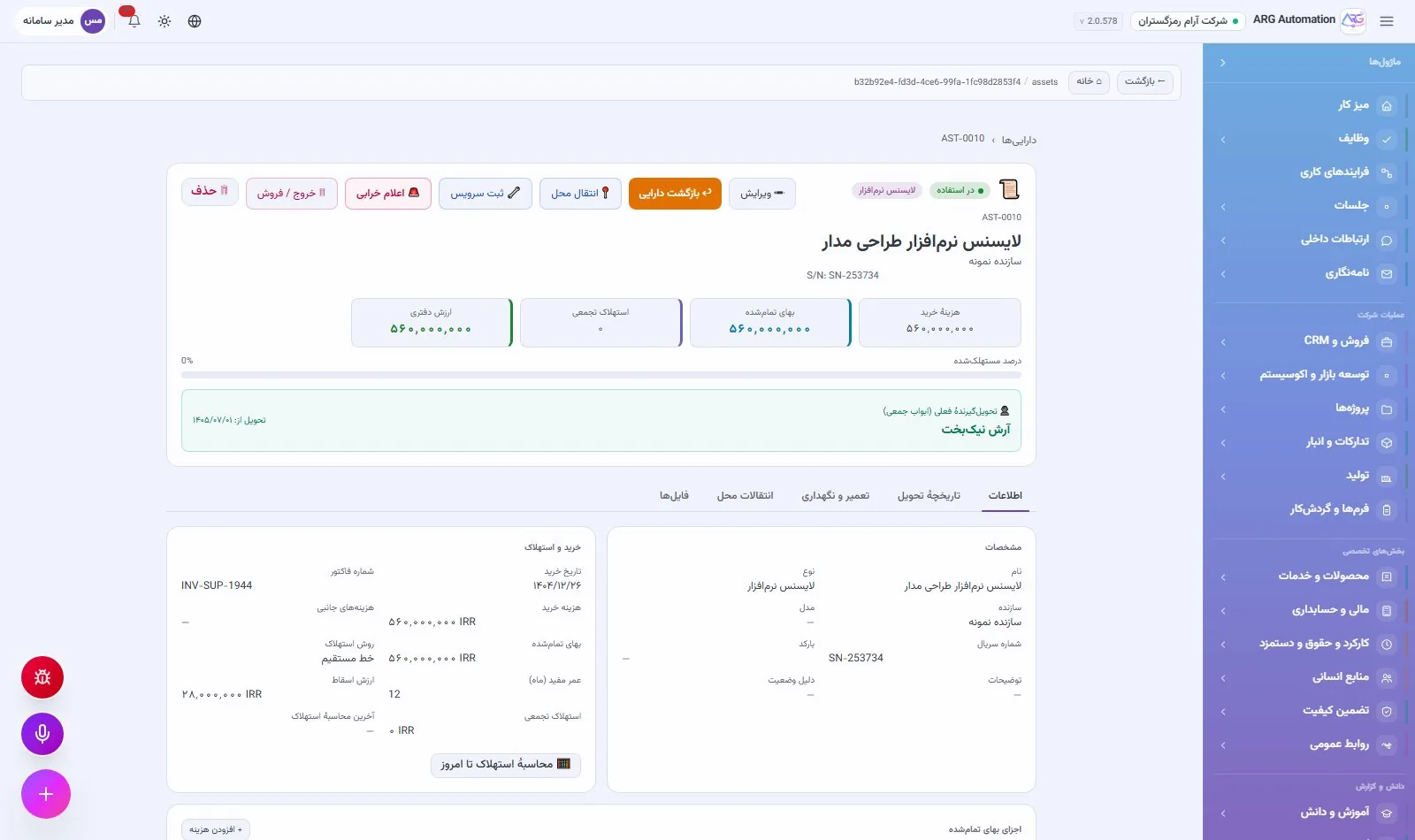
Every laptop, precision instrument, vehicle or workshop machine has a record: who has it, where it is, when it is due for calibration or service, how much it has cost and what its book value is. Handover and return are recorded with a signature, and maintenance due dates are not forgotten.
The asset record
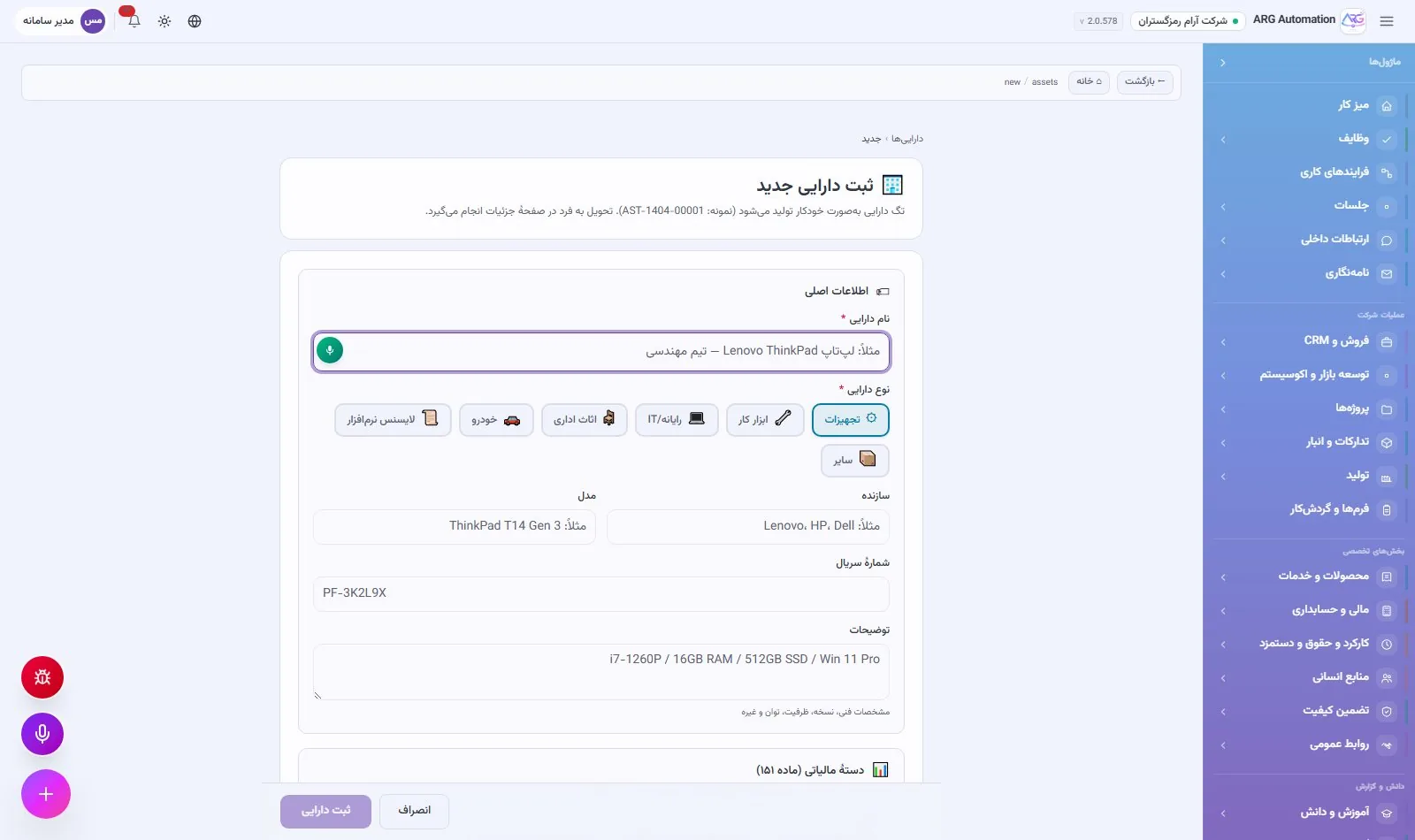
A unique tag, seven types and five statuses, composite assets (parent and components), and links to the supplier, purchase order, item and project.
Custody
Handover and return with history and a signature mark, bulk handover, and a “My assets” page for every employee.
Relocation
A change of location is recorded separately from a change of custodian.
Maintenance and calibration
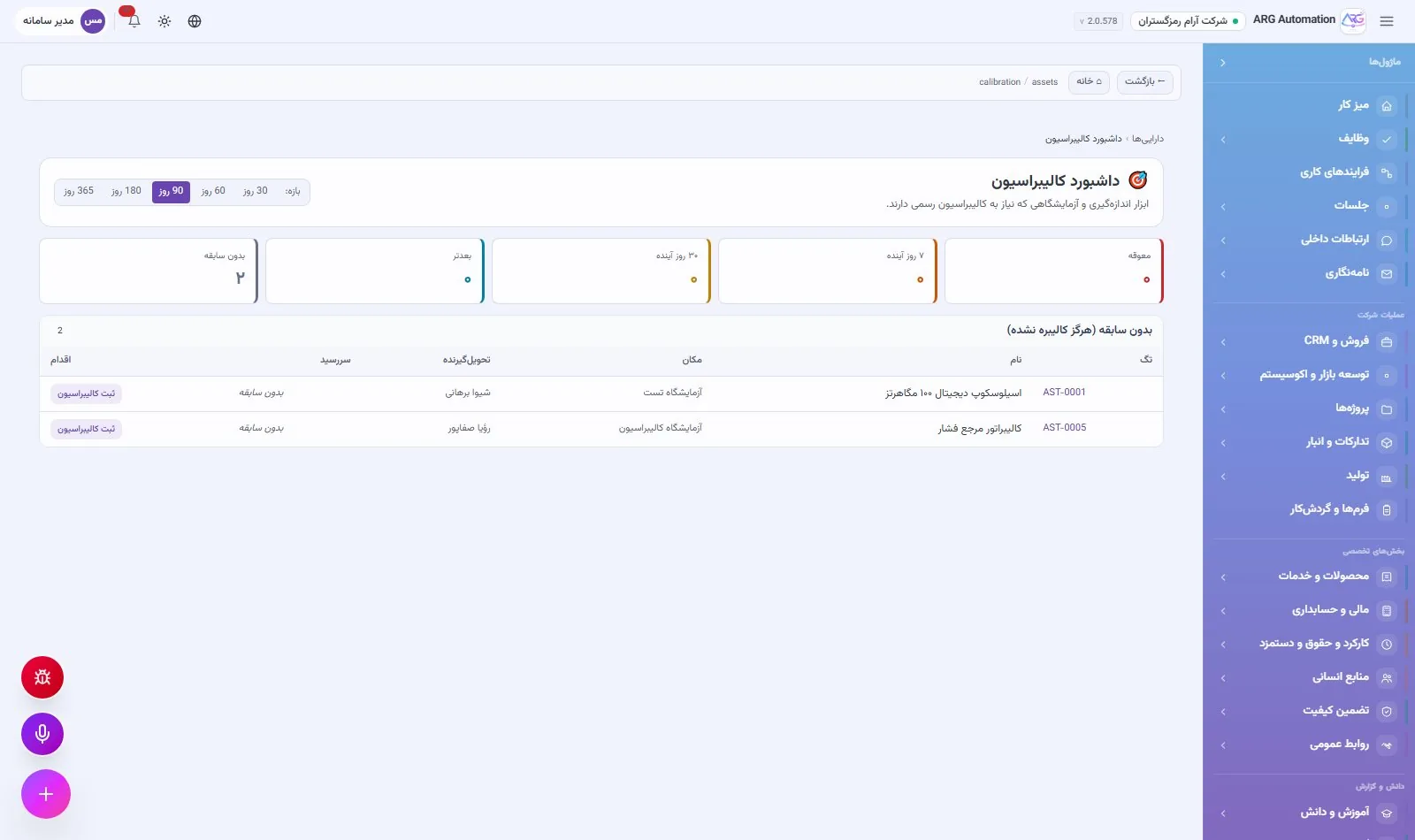
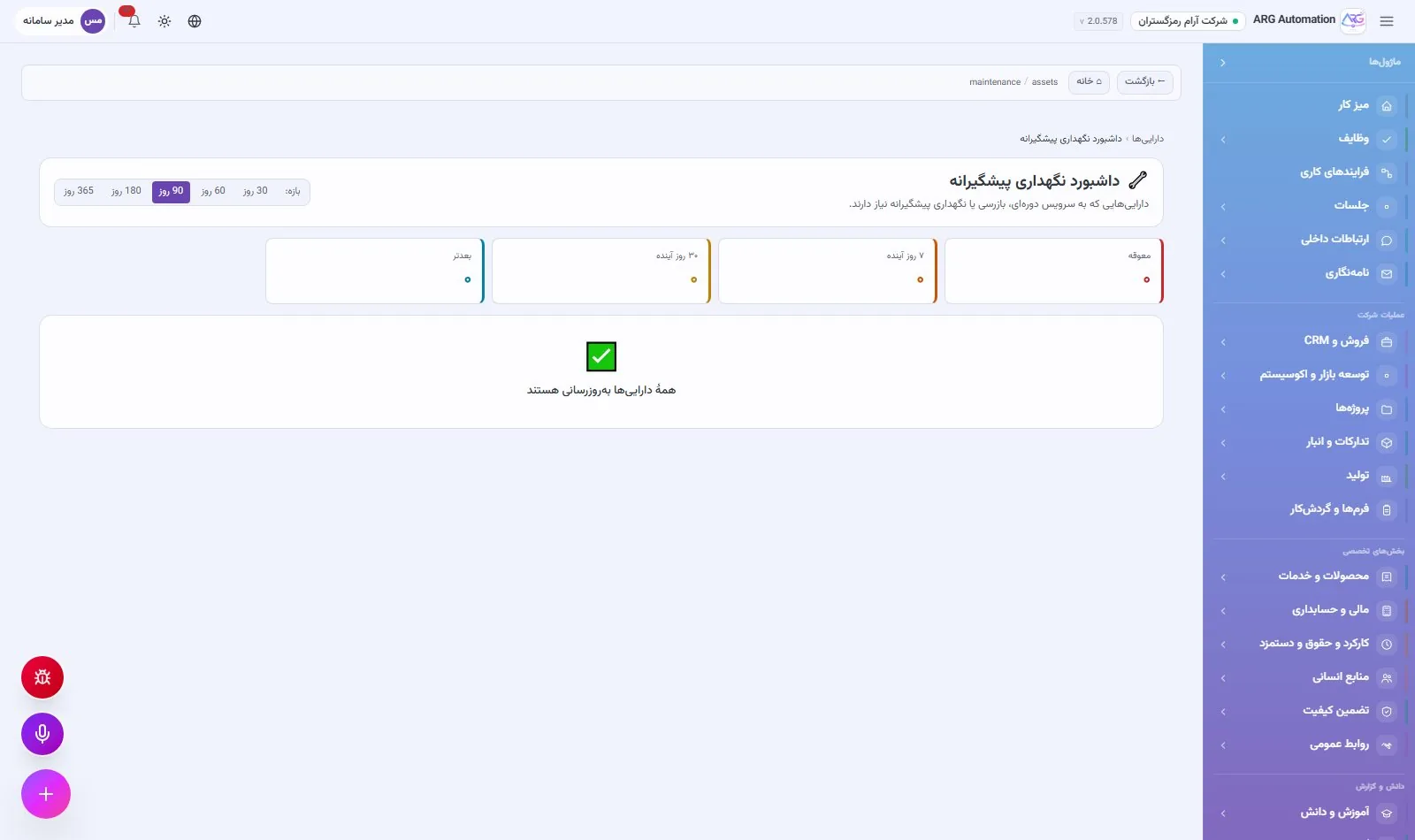
Maintenance history with cost and next due date, calibration with certificates, and a list of calibrations due.
Fault reports
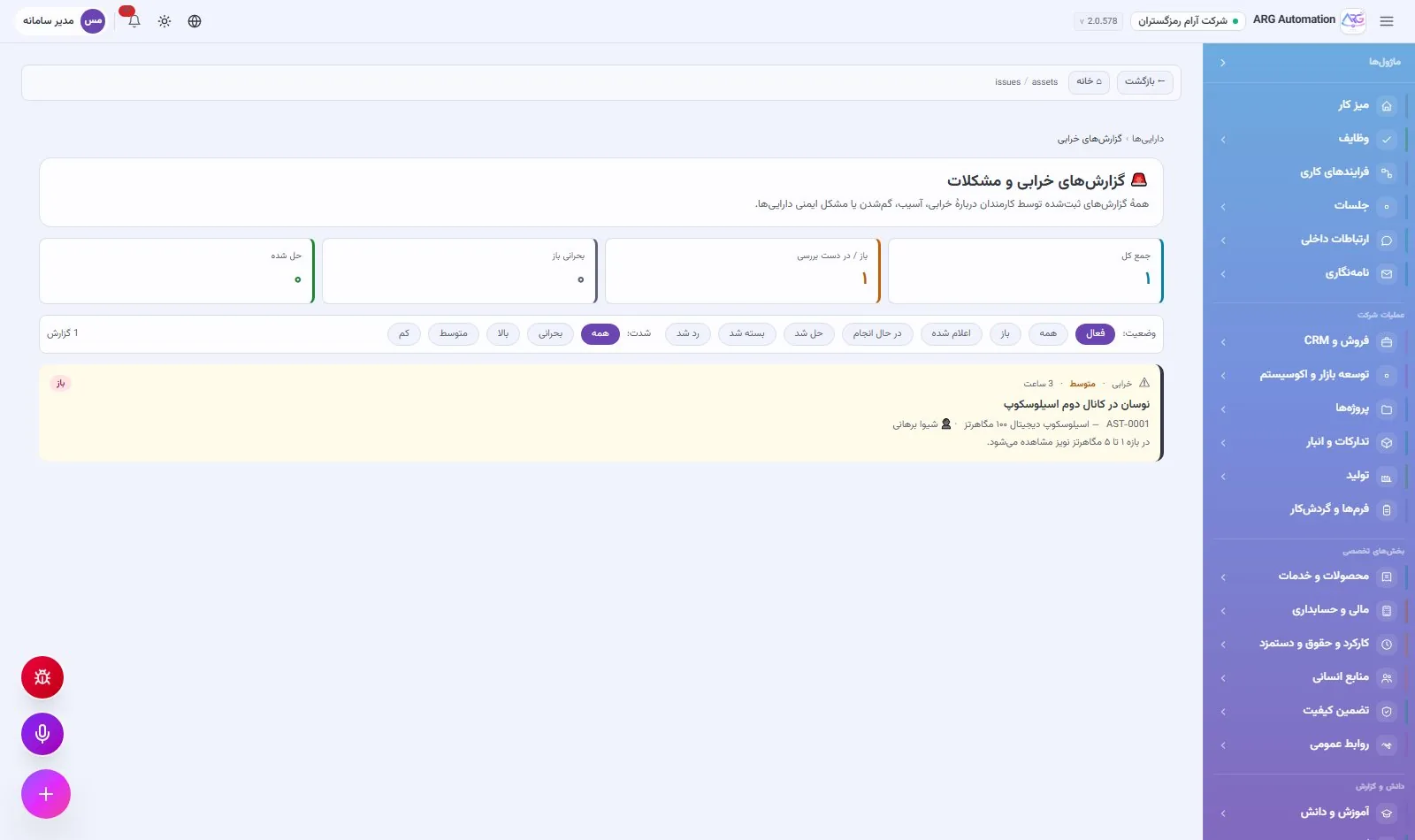
Faults are recorded with severity, type and status and linked to the repair.
Physical audit
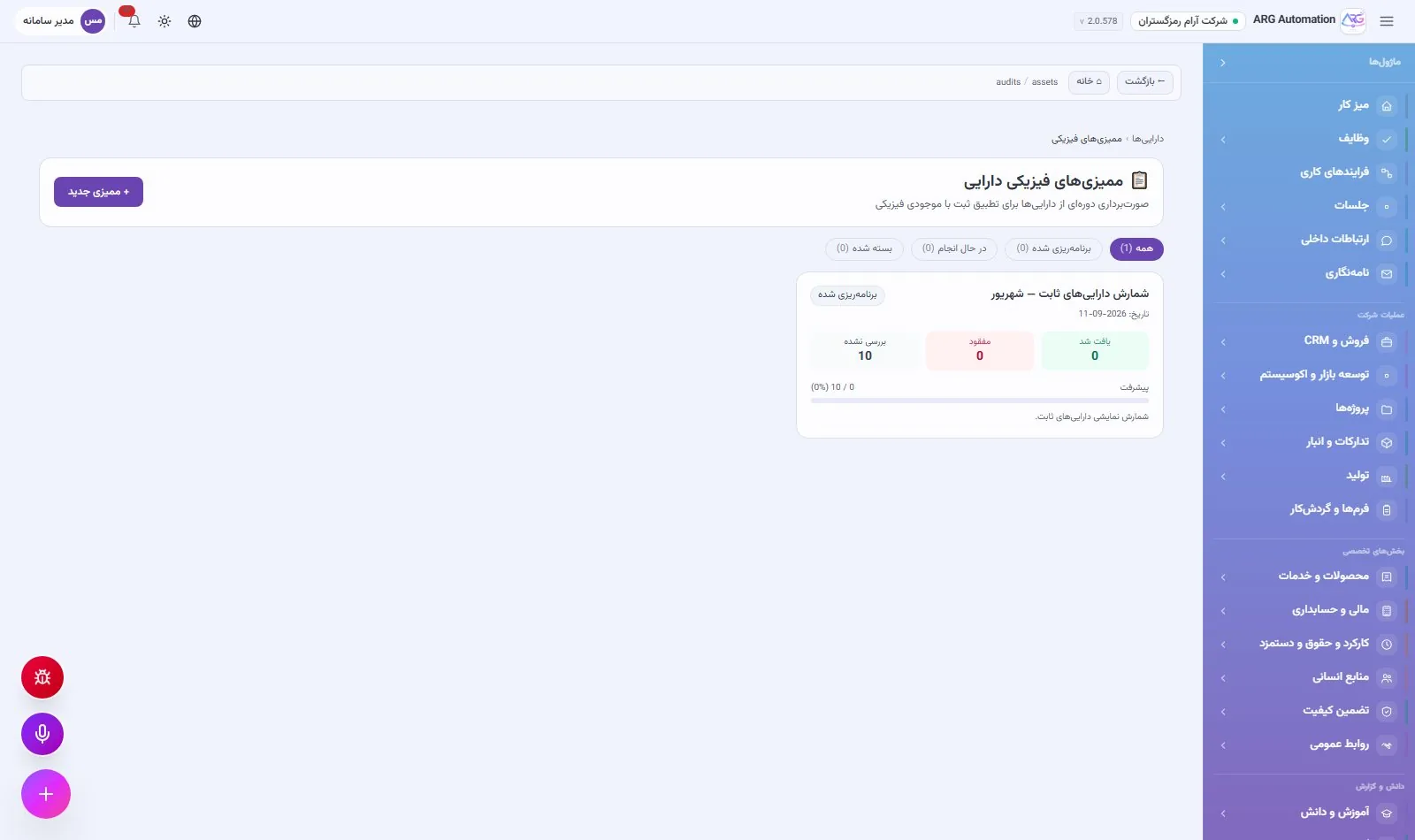
Counting assets with three outcomes, “found, not found, discrepant”, and a discrepancy list.
Depreciation
Straight-line and declining-balance, one by one or in batches, with the 16-category table of Article 151 of Iran’s Direct Taxes Act.
Disposal
Sale or scrapping with the gain or loss calculated and custody closed.
See ARG ERP for your organisation
Contact us for a walkthrough with sample data from your industry; existing users sign in here.