Finance & accounting
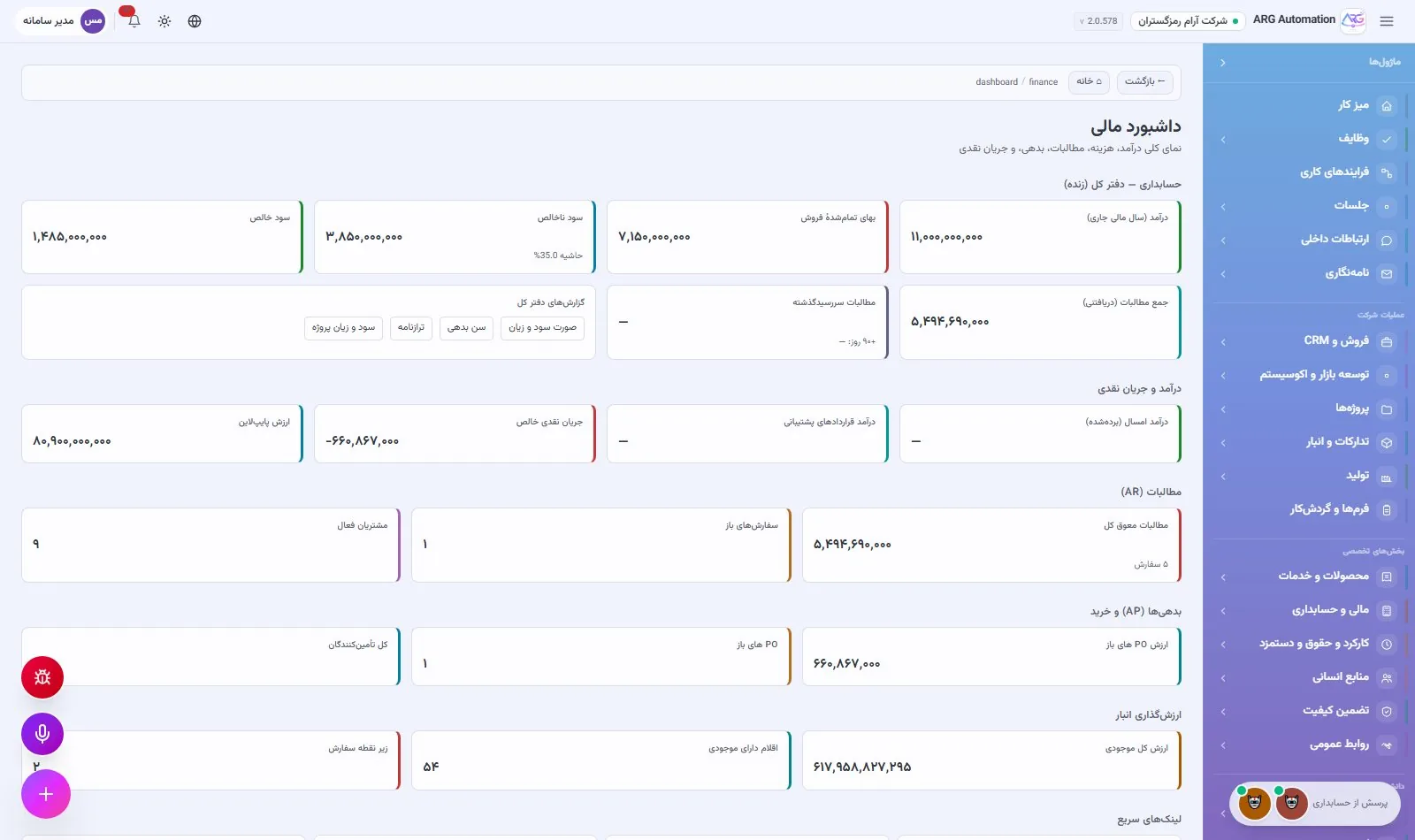
Accounting works on the same data the rest of the organisation records; ledgers and financial statements are built from posted vouchers on the Persian calendar.
Finance and accounting
Accounting in ARG ERP is not separate from the rest of the organisation. Invoices, payments, cheques, stock and production come from the same data the other departments record. Ledgers and financial statements are built from posted vouchers, on the organisation’s chart of accounts and the Persian calendar.
Chart of accounts
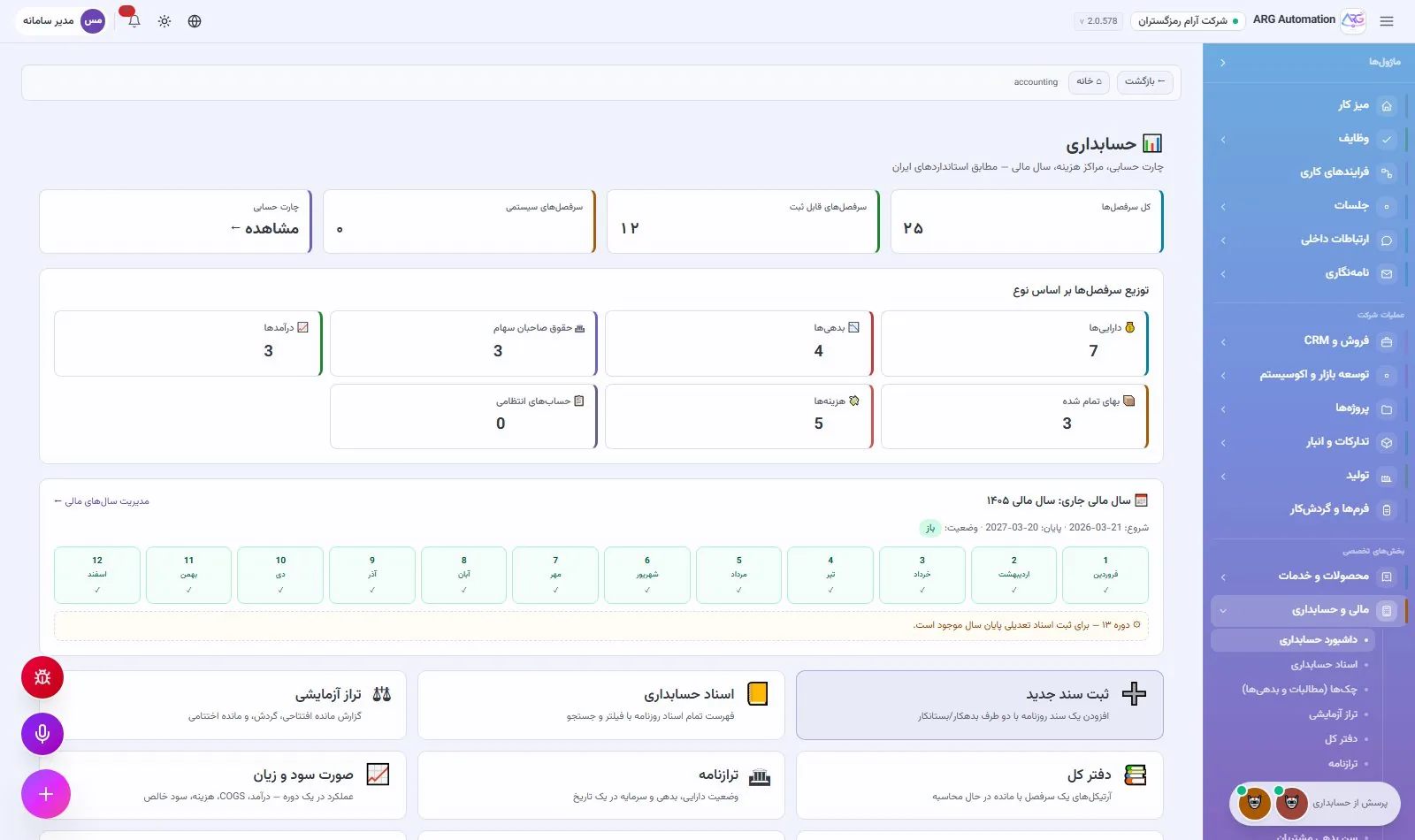
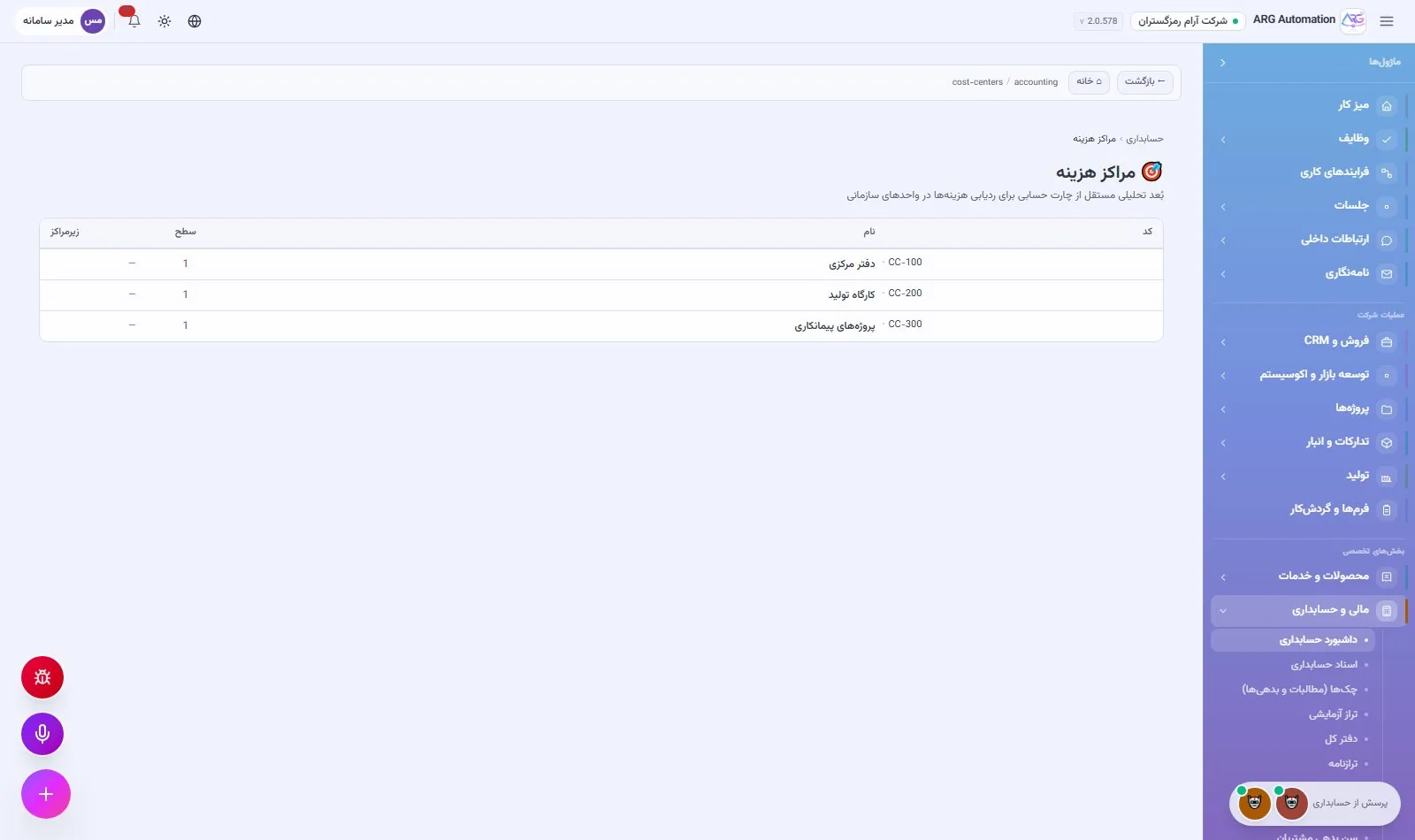
The chart of accounts has three levels: group, general ledger and subsidiary ledger, with floating detail accounts. Each account has a type (asset, liability, equity, revenue, cost of sales, expense and memorandum) and a debit or credit nature. For each account you can require a detail account, a cost centre or a project, so no line is posted without the information it needs. Cost centres are hierarchical and defined independently of the chart.

Fiscal year and periods
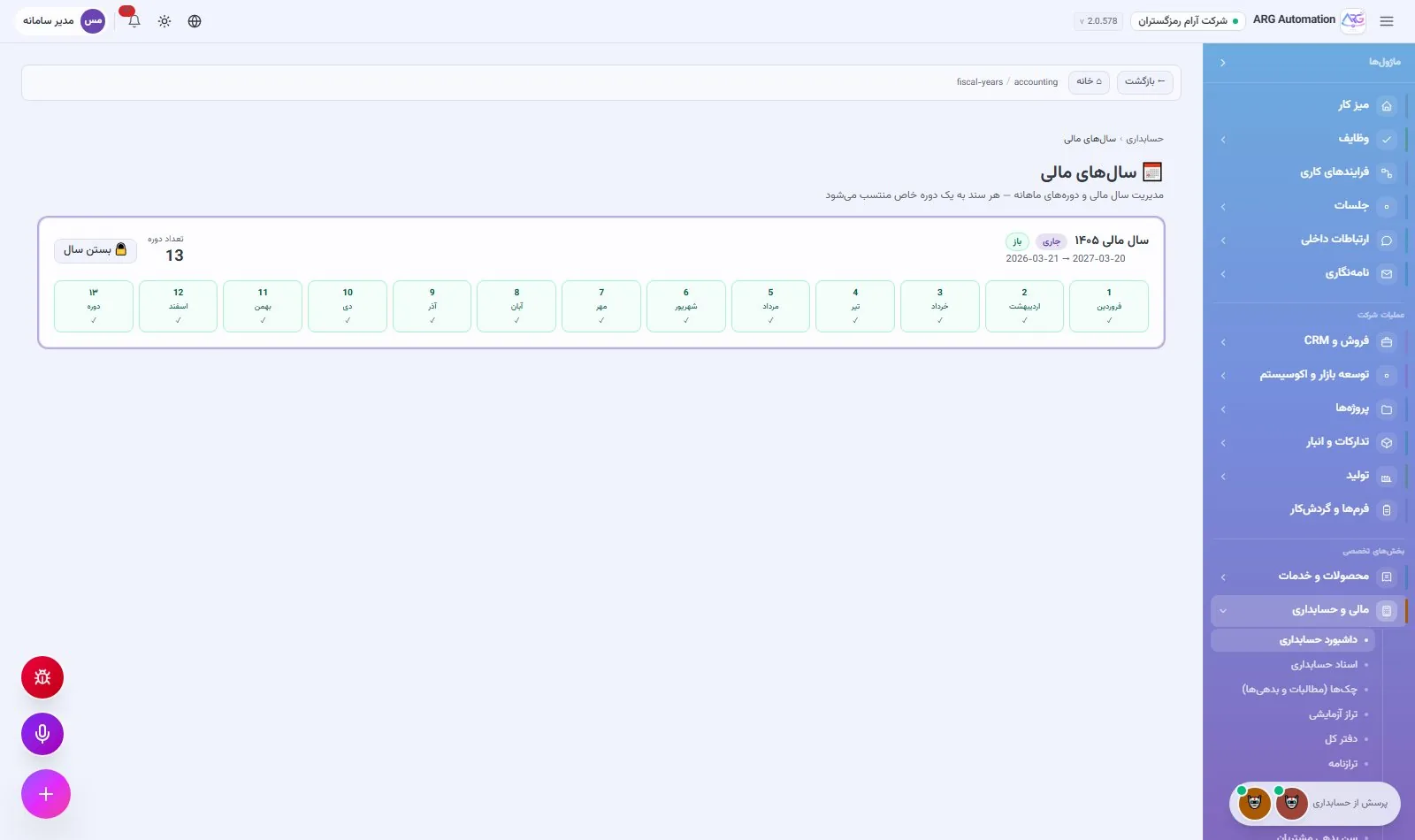
A Persian fiscal year is defined with twelve periods plus a thirteenth period for year-end adjustments. The year is closed by posting a closing voucher, after which the closed year cannot be changed.
Accounting vouchers
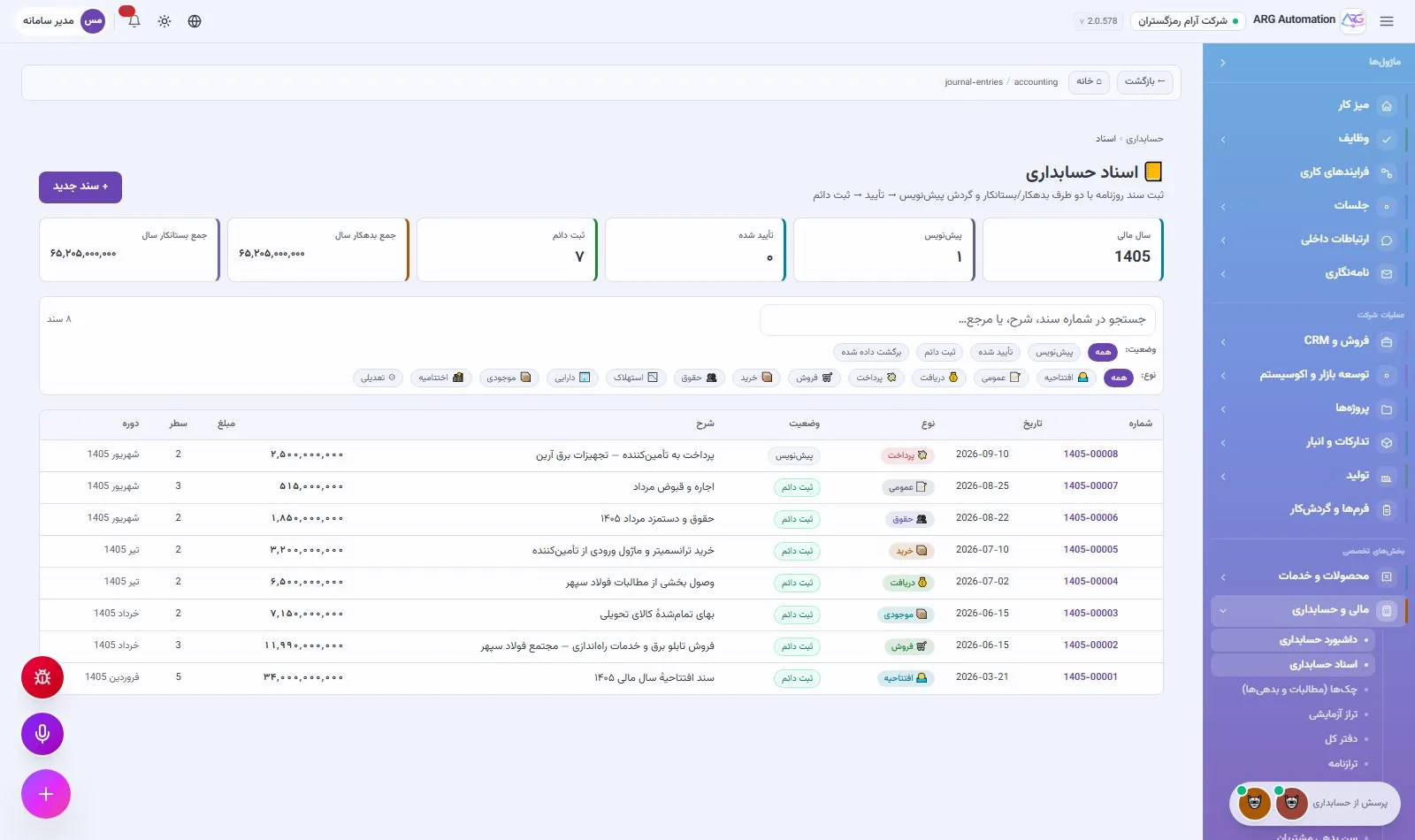
Every voucher follows a defined flow: draft, review, final posting and, if needed, reversal with a counter-voucher. Before posting, the system checks that debits and credits balance and that each account’s requirements are met. A voucher can be copied with one click and each voucher has its own yearly sequential number.
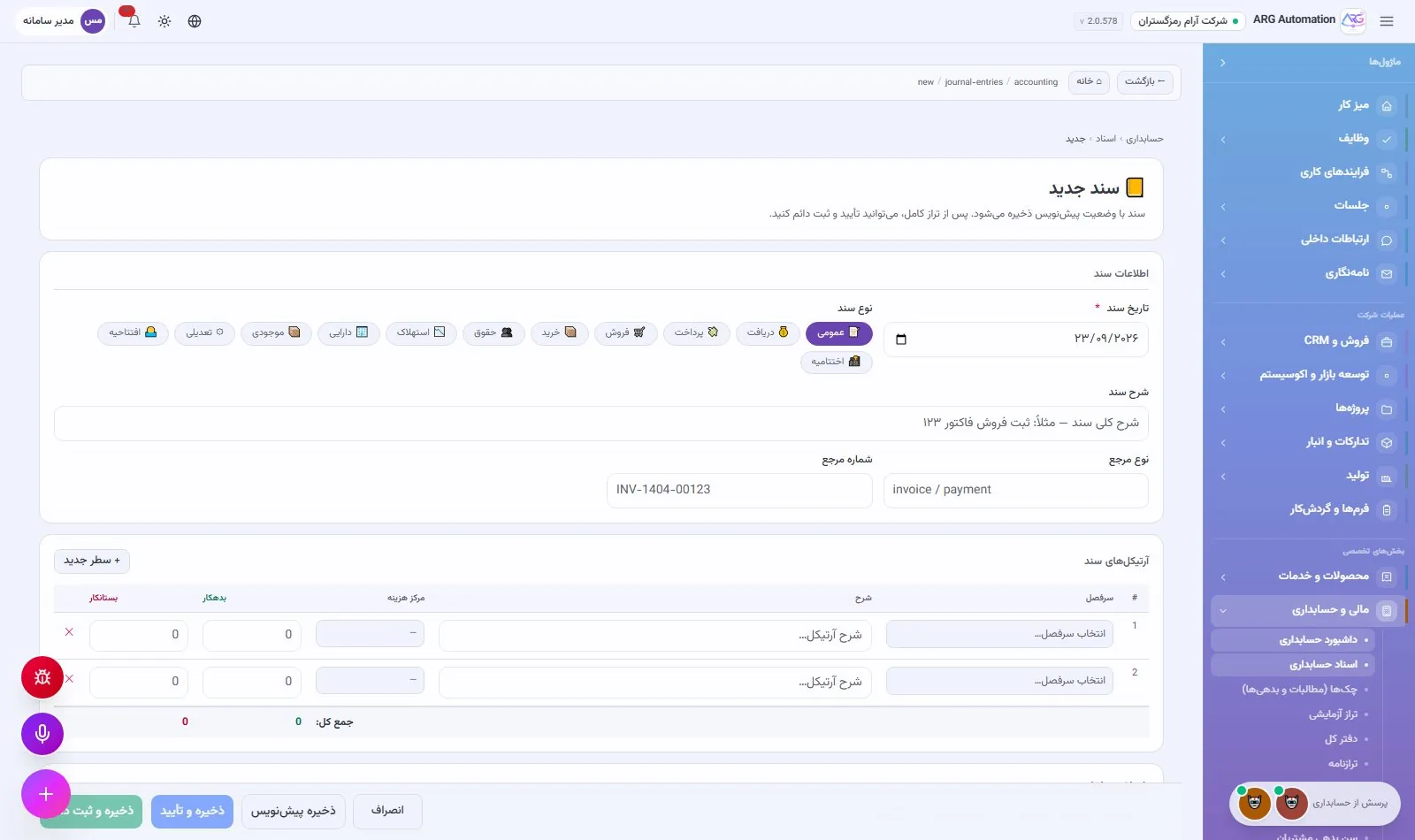
Linking operations to accounting
During setup the organisation’s chart of accounts is loaded and the default accounts for operations are configured. From then on, issuing a sales invoice and completing a production work order create their own accounting voucher automatically, with no duplicate entry. Other events are recorded with manual vouchers and the review flow.
Ledgers and financial statements
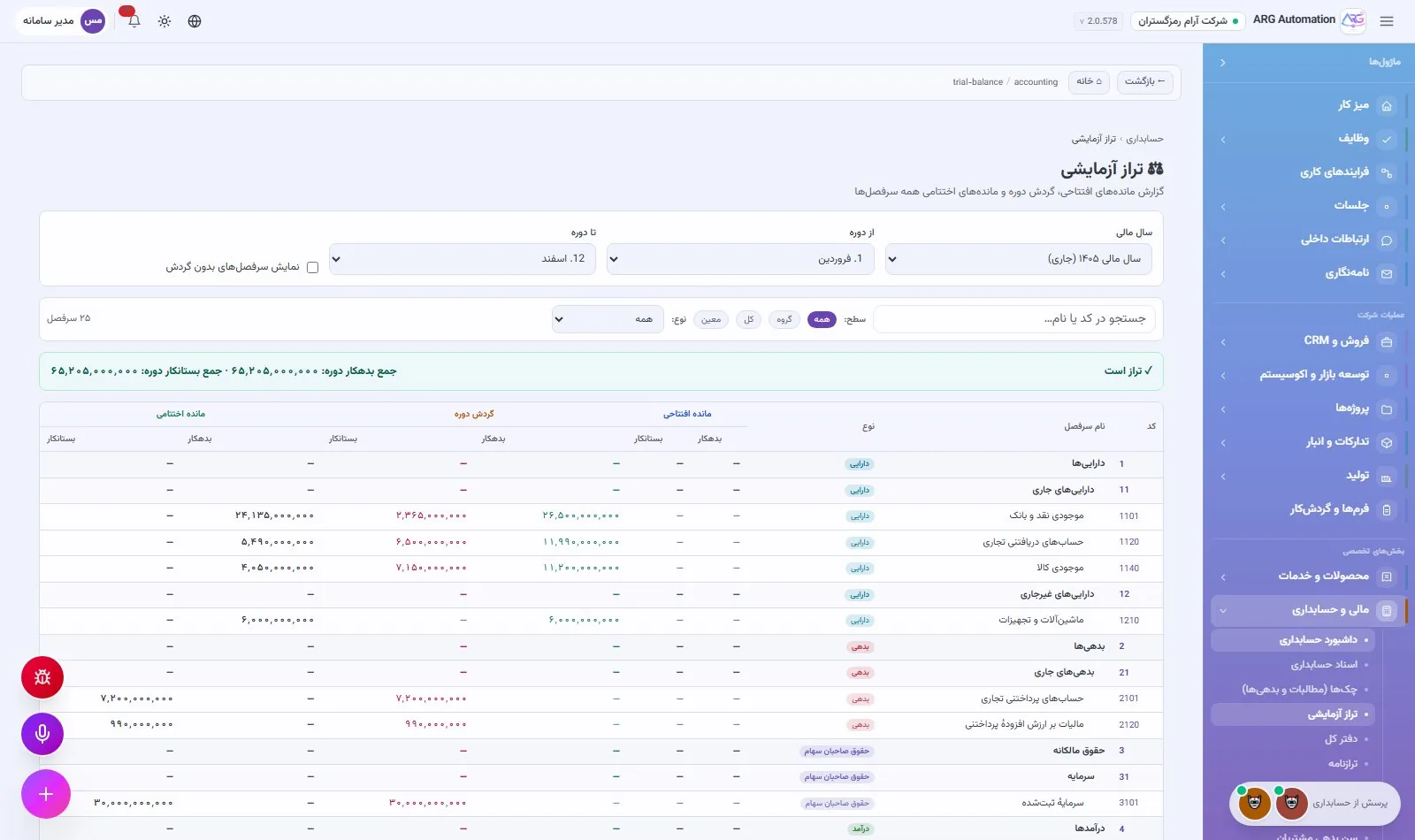
Trial balance
Opening balance, period movement and closing balance of each account at every level, with a balance check.
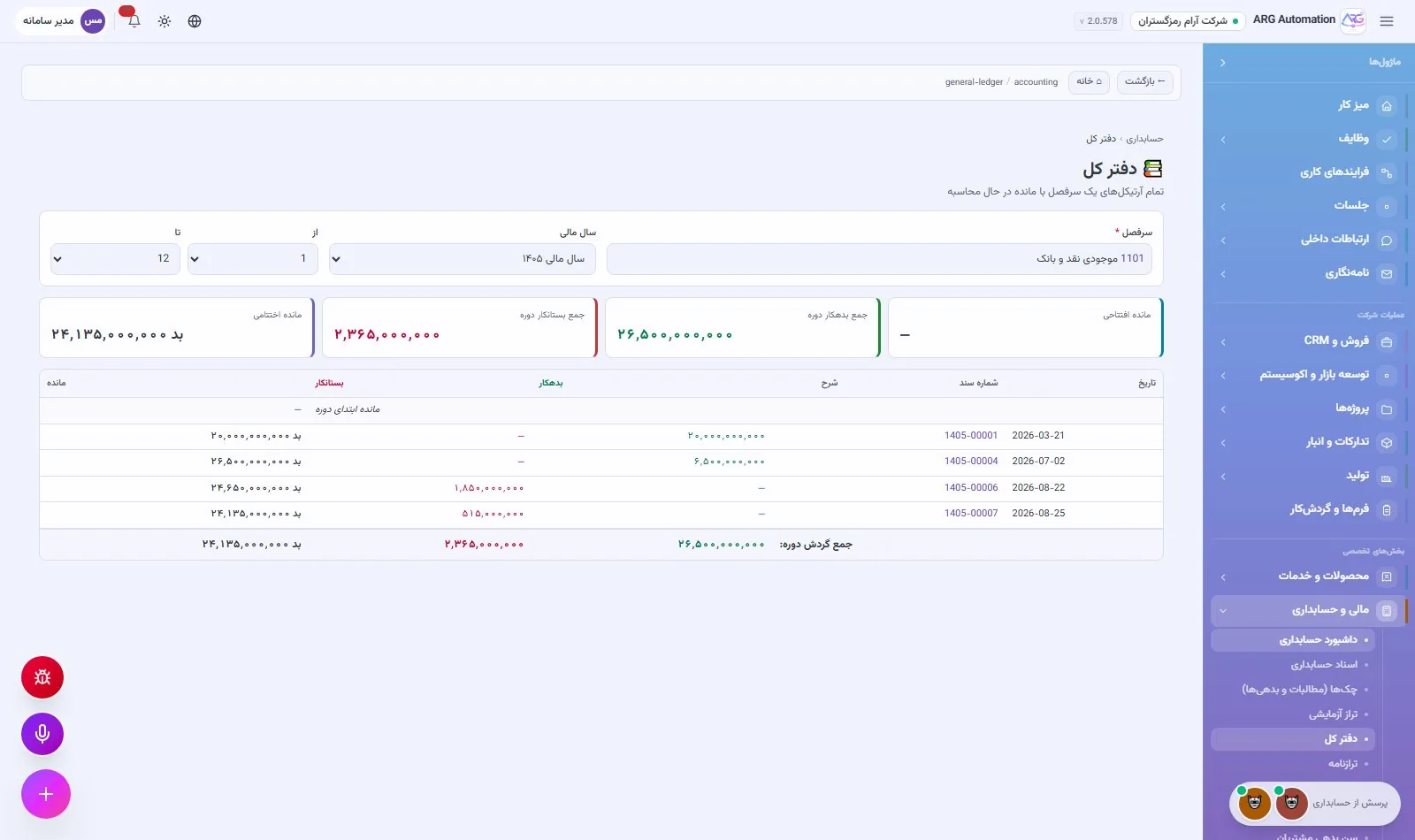
General ledger
An account’s movements voucher by voucher with a running balance.
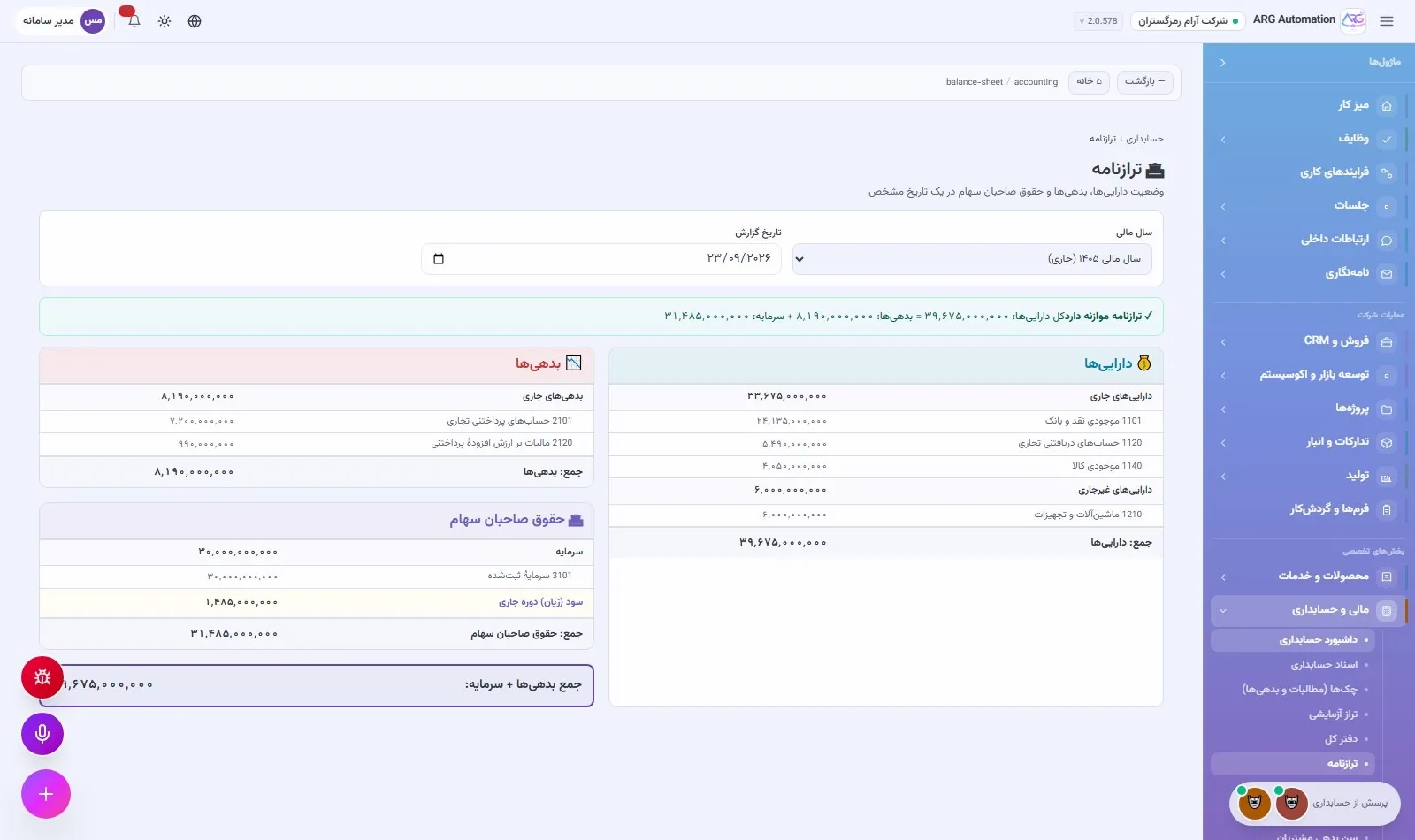
Balance sheet
Assets, liabilities and shareholders’ equity at a date.
Income statement
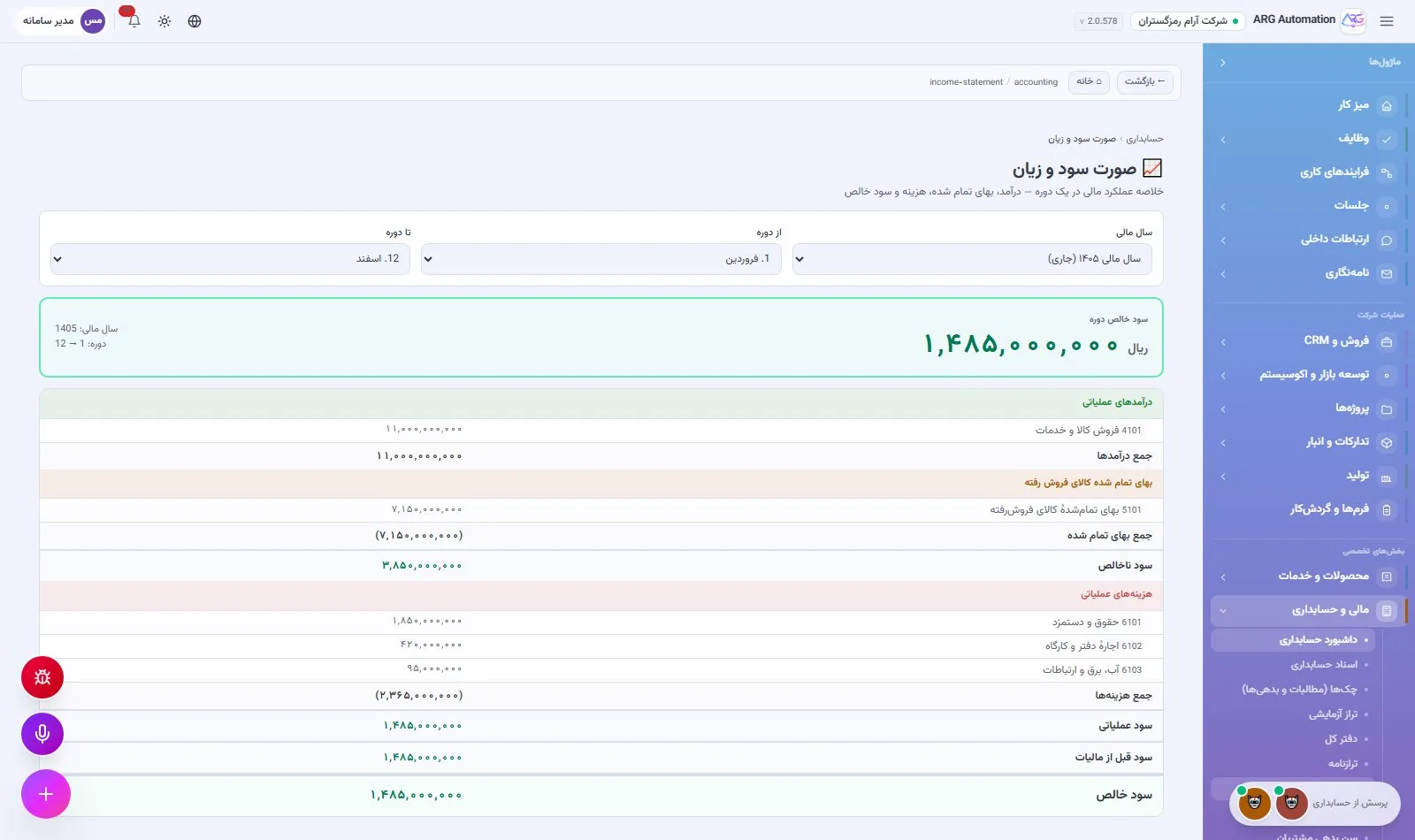
Revenue, cost of goods sold, expenses and net profit for a period.
Cheques and VAT
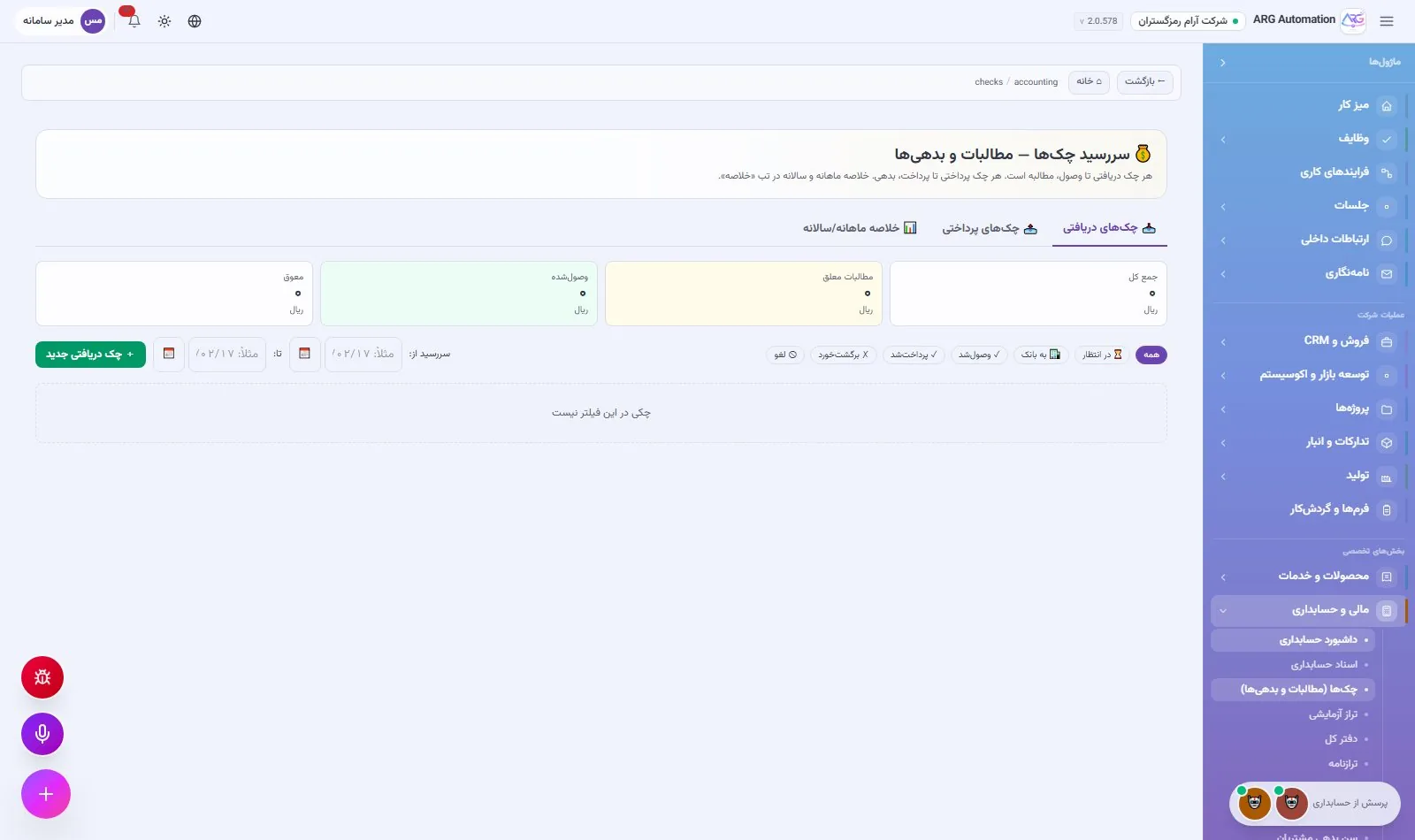
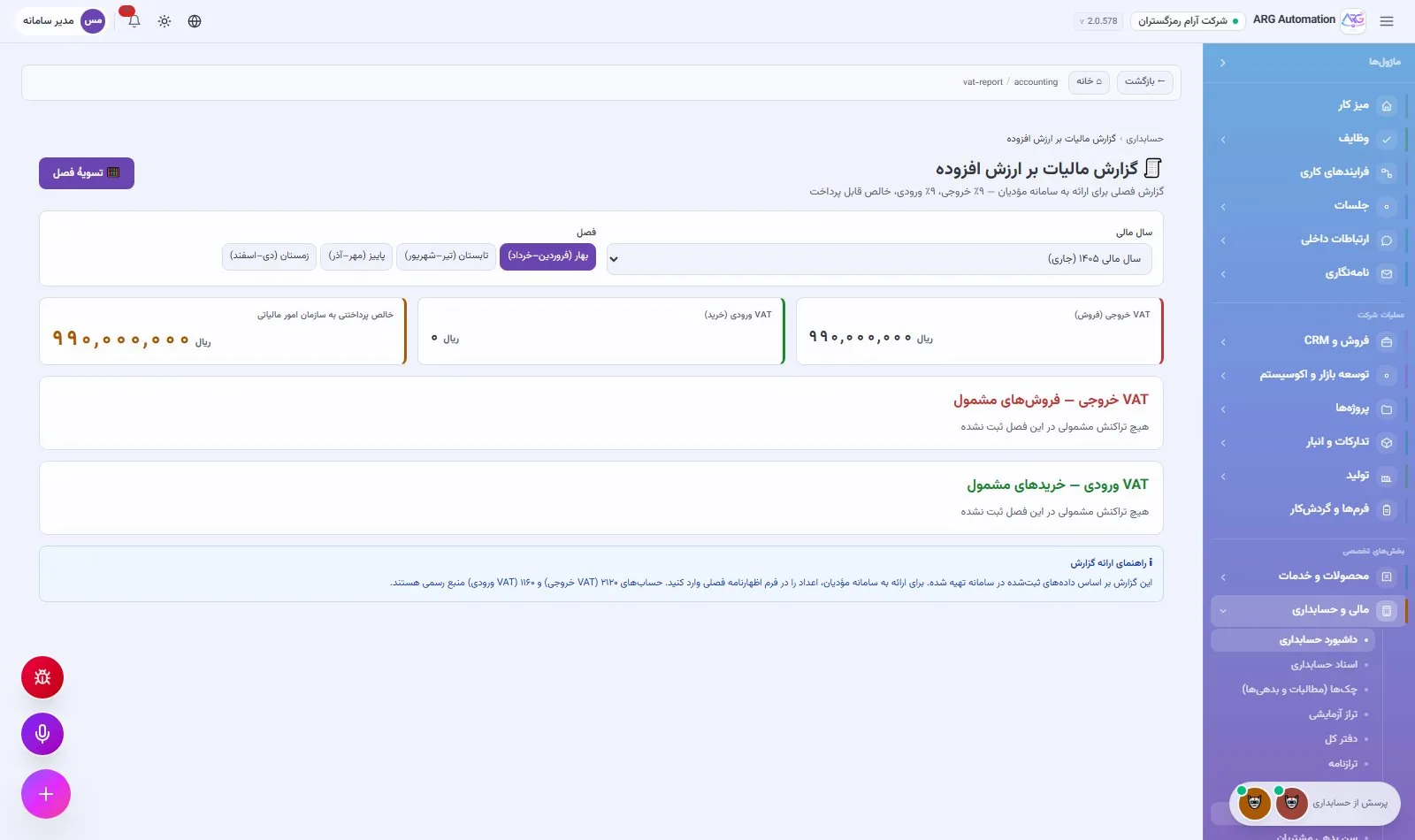
The cheque book keeps received and issued cheques with their due dates and seven statuses, and shows the cheques coming due. The value-added tax report calculates, for each quarter, the tax on sales, the input tax credit on purchases and the net amount payable from the documents in the system.
See ARG ERP for your organisation
Contact us for a walkthrough with sample data from your industry; existing users sign in here.