01
Hardware and programmable runtimes
Controllers, communications and local displays: from BASIC and edge control logic to the Pascal compiler and independent threads in Phoenix Embedded. Project behavior is defined within the platform.
ARG Electronics develops an integrated ecosystem for industrial automation and building management systems (BMS), connecting controllers and sensors with industrial IoT, digital twins, AI, machine vision and biometric security. These technologies serve industry, buildings and critical infrastructure. Fully domestic, passive-defense approved and sanction-independent.
“From one sensor to a smart city” — one shared protocol, one platform, one company.
Face recognition & identification system — Iran’s first and only, officially patented.
ARG PLC controllers passed the EPIL operating tests for industrial / harsh conditions.
Top award at the 2nd Innovation Bazaar — Iran’s national showcase for innovative knowledge-based products.
Selected at the 5th national unveiling of successful knowledge-based products.
ARG is a family of platforms for building smart systems. Hardware engineering, programming languages, data models, control engines and applications connect across industry, energy, infrastructure, agriculture, services and enterprise.
Controllers, communications and local displays: from BASIC and edge control logic to the Pascal compiler and independent threads in Phoenix Embedded. Project behavior is defined within the platform.
ENID identifies each point, ACV carries its value and state, and Device Catalog turns device-model knowledge into protocol mappings and project points.
Rules, scenarios, state machines, ML processing, LLM assistants and Digital Twin each have distinct roles. Services and APIs expose them through different products and applications.
Explore building management, IoT, digital twin and enterprise software solutions. Each product card brings together its guide, workspace, API and related resources.
Fleet visibility, 3D views, cash and maintenance workflows with an in-terminal XFS agent and environmental controls.

AI-native Life & Business OS — health, finance, education and a full ERP in one installable Persian PWA.
Full Novexa product presentation with real screenshots, architecture, market and roadmap.
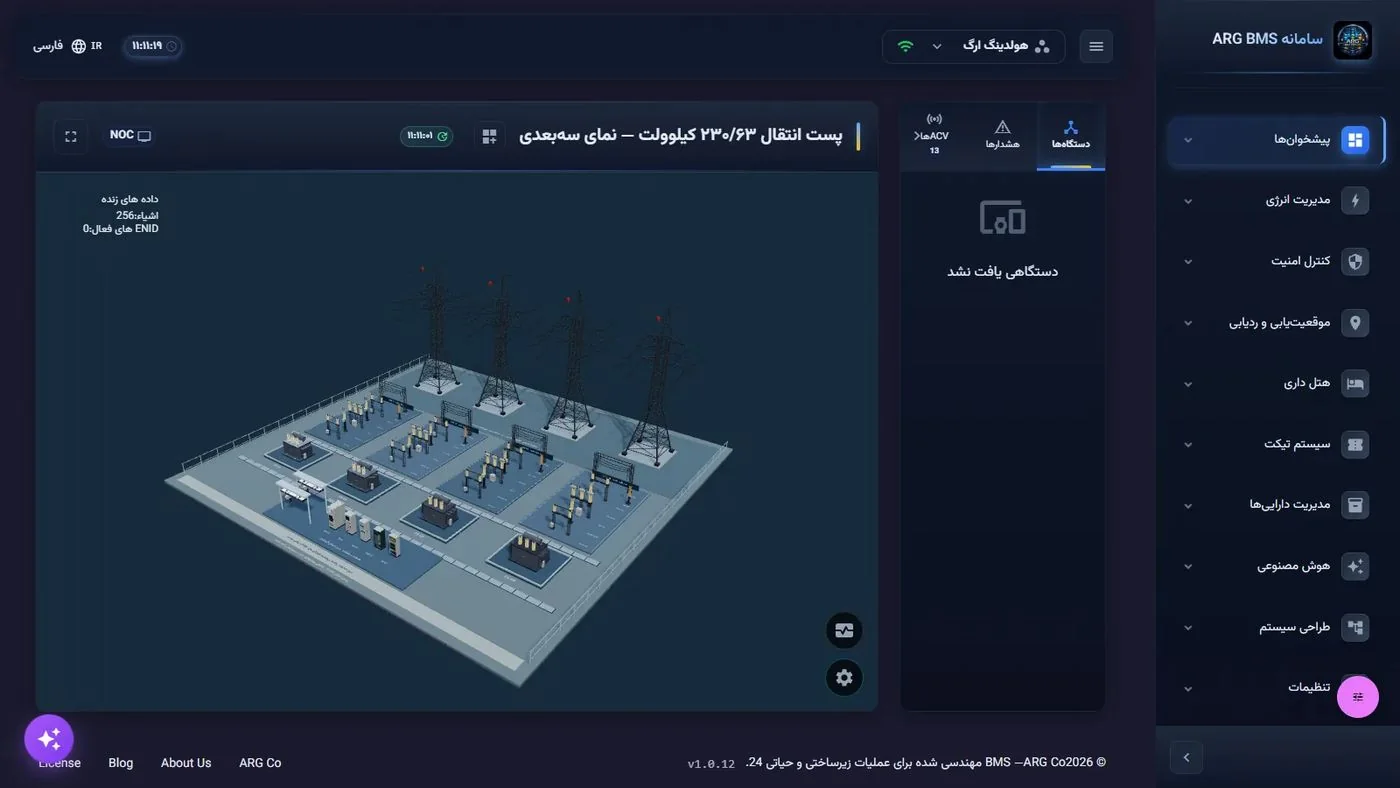
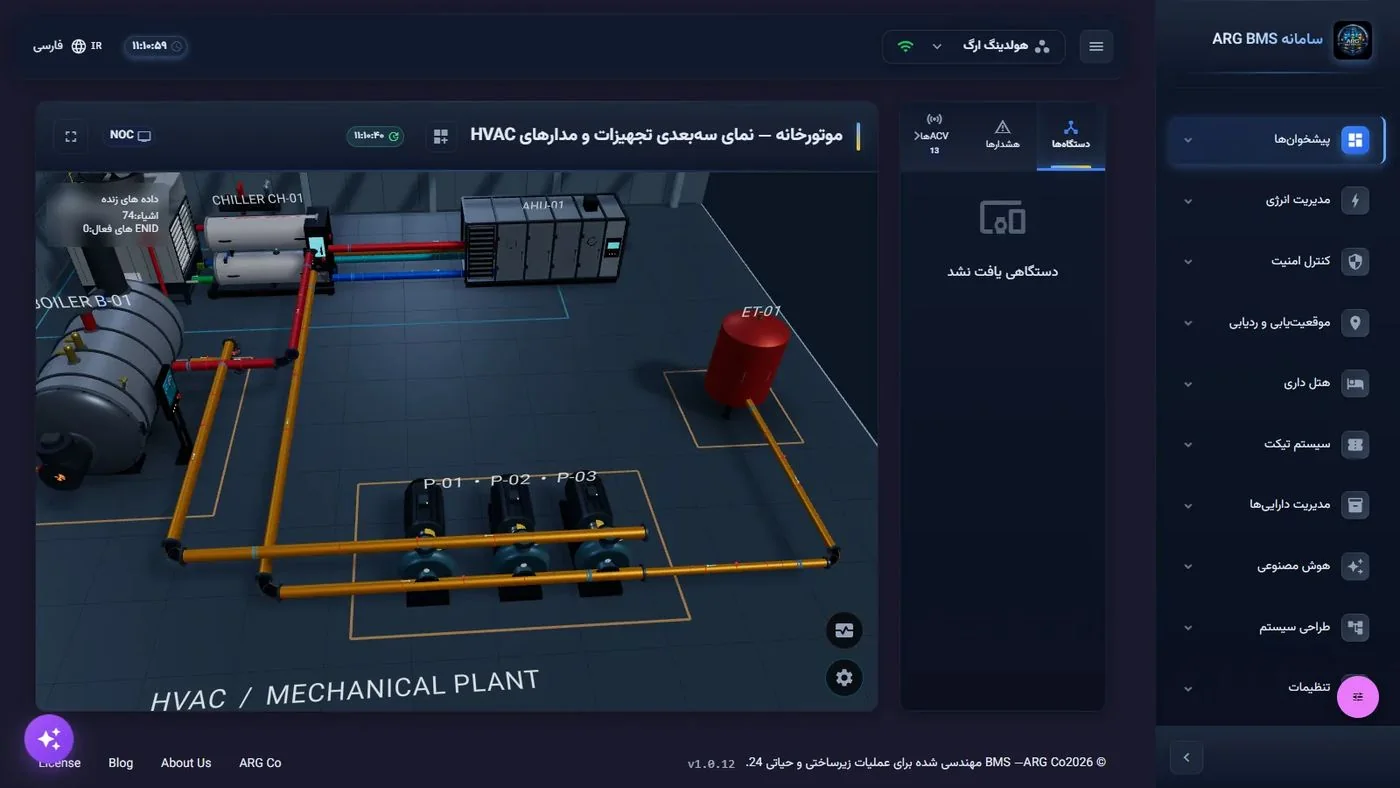
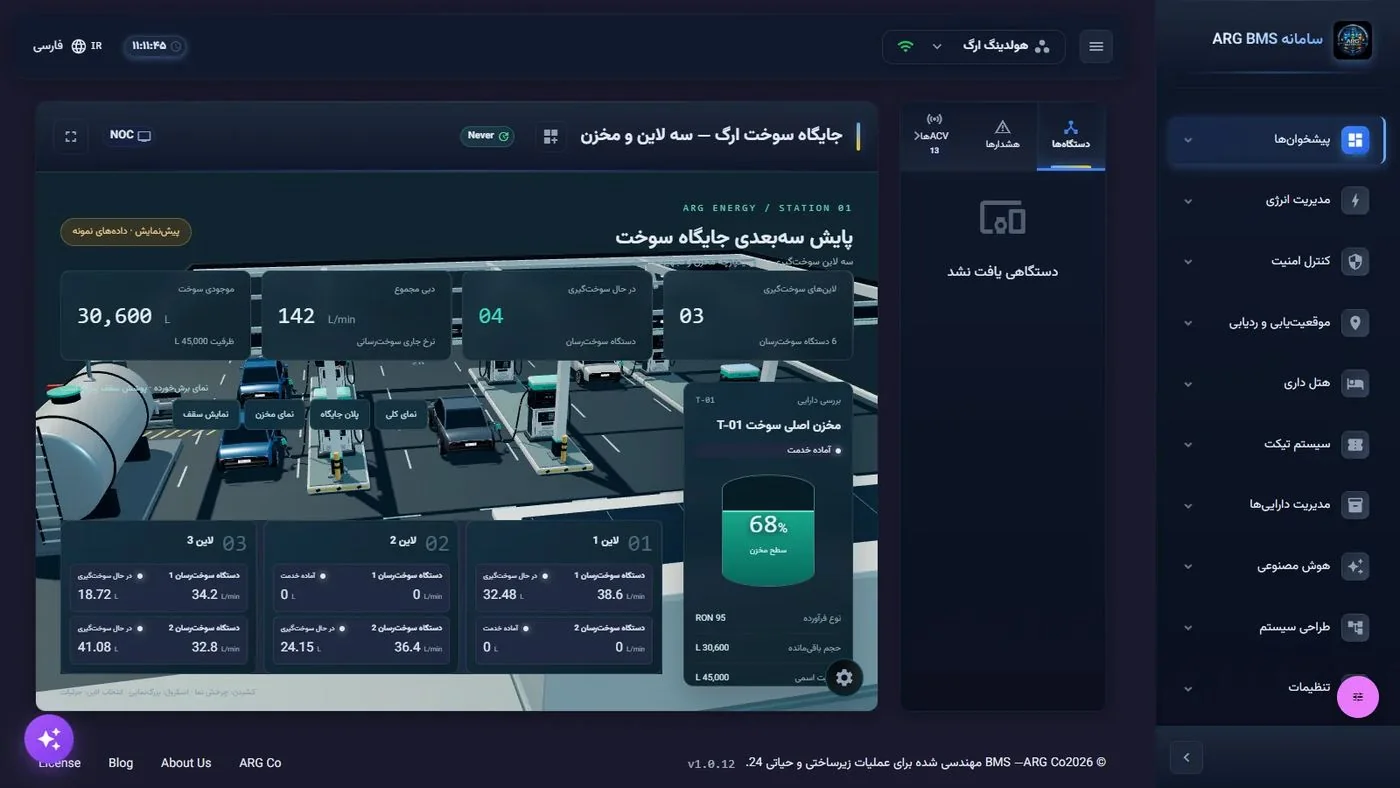
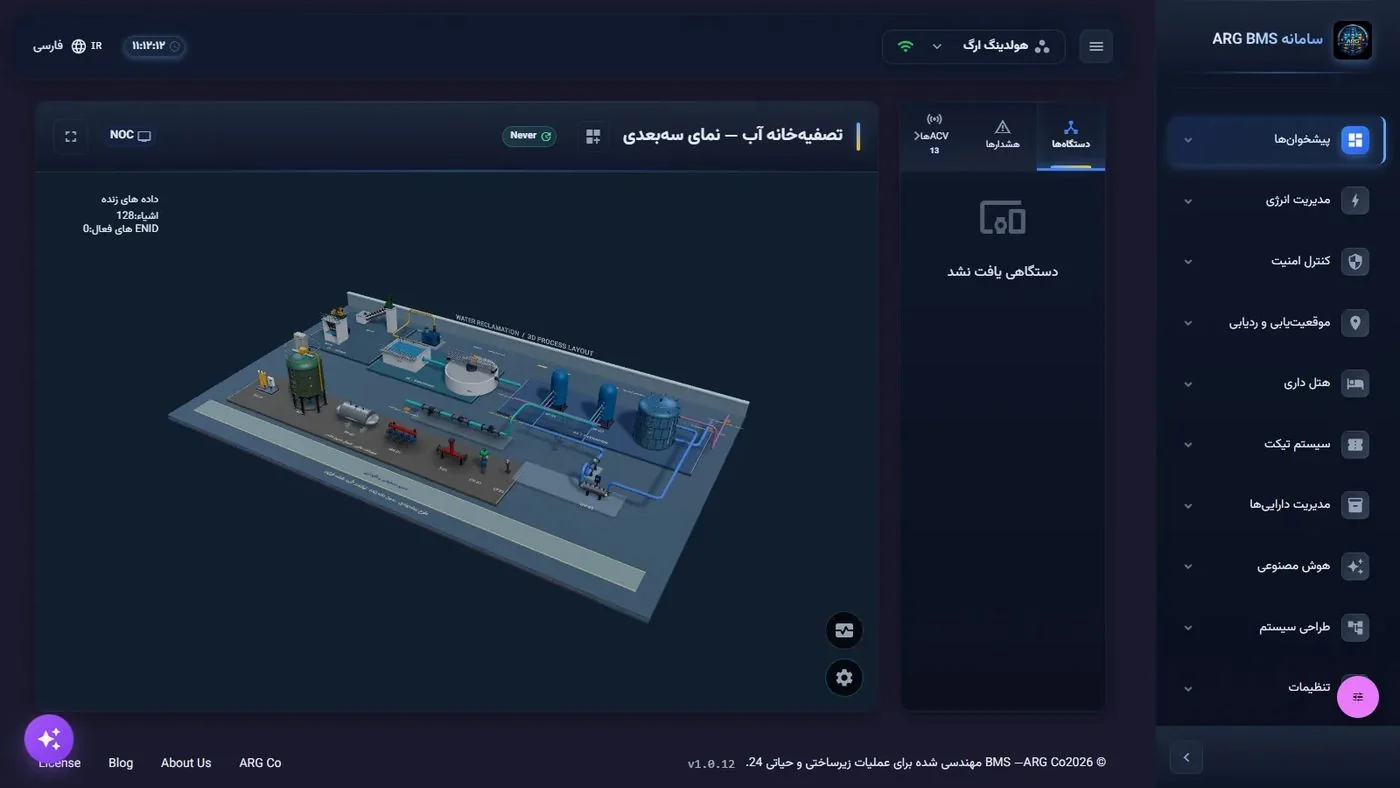
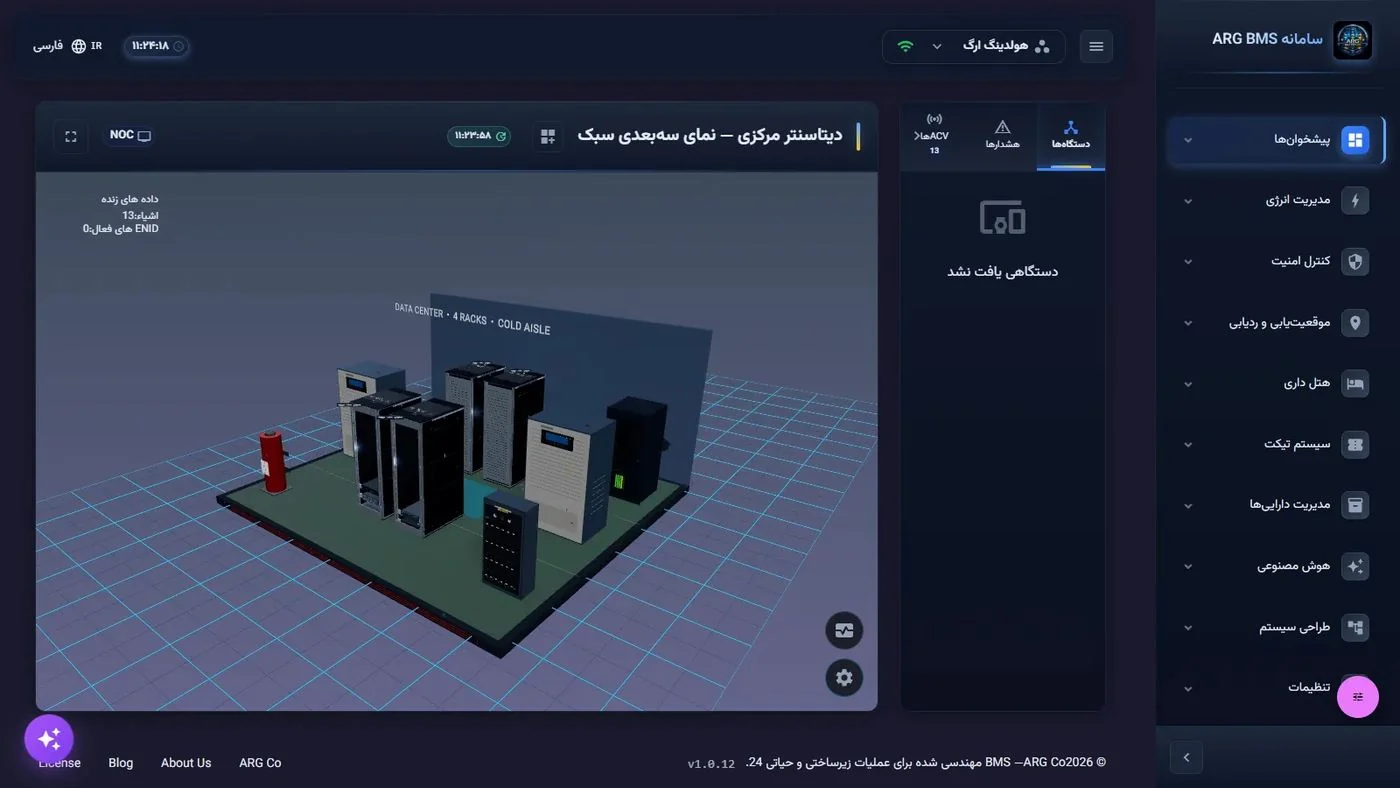
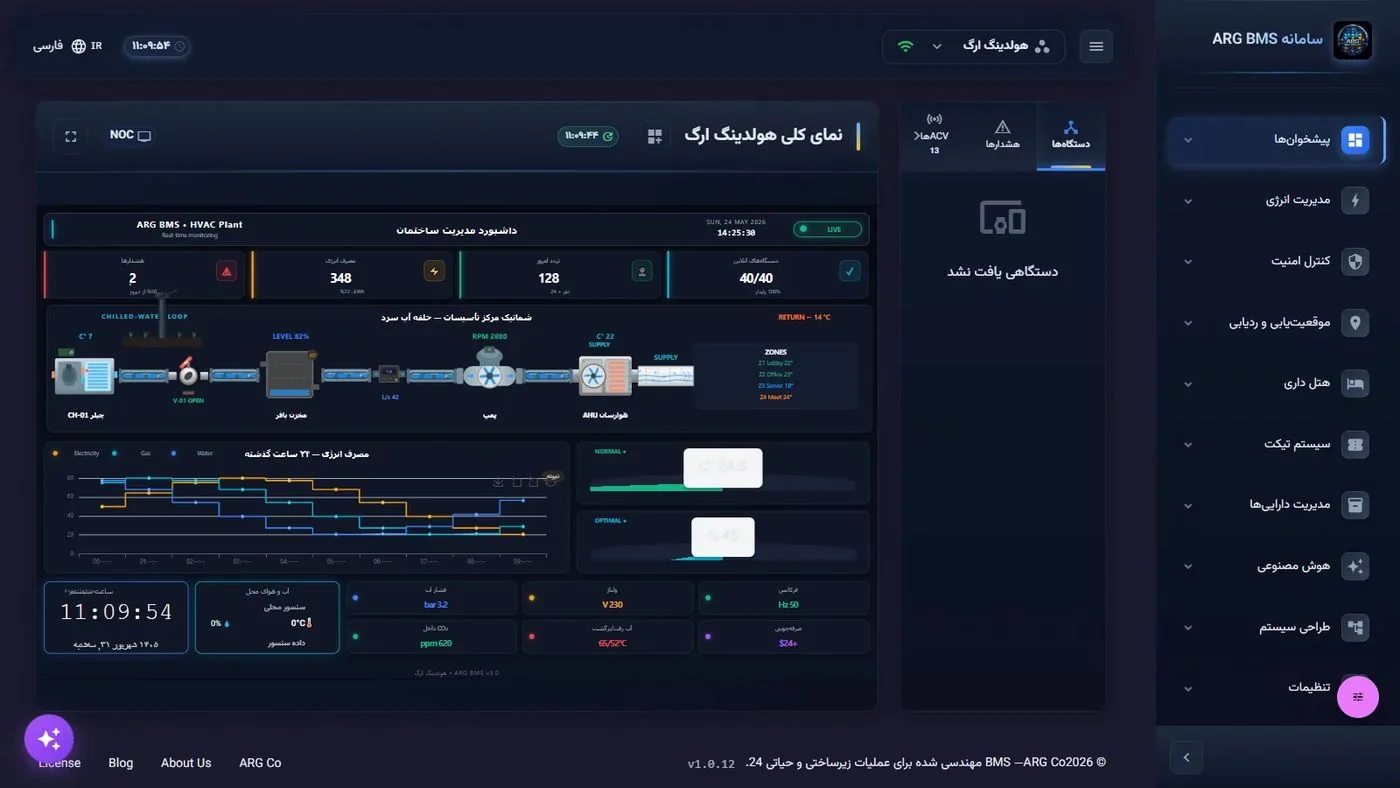
Comprehensive BMS with live dashboards, mobile app and 20 subsystems.
412 endpoints covering devices, ACV, energy, alarms and dashboard designer.
Unified sensor, gateway and ENID management with Modbus, SNMP, MQTT, BACnet.
Rack monitoring, UPS, cooling, energy and security for data centers on the BMS platform.
Climate, irrigation, fertigation and plant vision with a sci-fi HUD UI.
Manage providers, prompt templates, chatbot and industrial assistant.
REST API for LLM, RAG, embeddings and agent orchestration on Java backend.
Sales, purchasing, inventory, finance, projects, production, HR and correspondence on one dataset, with virtual AI employees.
30+ sub-APIs covering HR, CRM, Sales, Accounting, AI Agents and Workflows.
Spring Boot Backend + Swagger
Centralized catalog of 806+ devices, brands and models with their protocols.
Search & sync API for the catalog, protocols, point templates and schemas.
Define BMS digital-twin types from real Modbus templates, validate, publish versioned types and generate runtime code.
Market analysis and signal management with independent strategy engines, account risk controls, ParsGold Bridge and MetaTrader EA, plus Persian and English catalogs.
Signal engine, 17+ ML models, backtesting, fundamentals and WebSocket feed for EAs — 340+ endpoints.
Standalone currency-pair system (EURUSD, GBPUSD, USDJPY, AUDUSD) with its own users and licensing, separate from gold.
Binance spot market ingestion, opportunity ranking and signals under a venue-risk policy — analysis only, no order execution.
ARG neural core: Persian voice assistant with LLM, speech recognition/synthesis and hooks into the ecosystem.
Control and monitoring panel for the DeFi flash-loan arbitrage bot — pool state, opportunities and logged executions.
Face recognition (SCRFD + MobileFaceNet), object detection (YOLOv8), liveness and RTSP processing.
Offline map tile server for industries, airports, metro and security.
47+ industries — documentation, system diagrams, RoI and technical comparison.
Official site of Aram Ramzgostaran (ARG), a knowledge-based company — services, projects and product showcase.
ARG software, intelligence and hardware each have a clear role. Explore what each system does, where it belongs and how it relates to the rest of the architecture.
Independent products, shared services and connected devices, with clear boundaries between experience, processing and physical control.
An engineering example using pump-pressure monitoring. Select each stage to see its input, processing and output. Actual paths depend on project equipment and configuration.
Engineering valueProtocol differences stay in the connection layer, while application logic consumes pressure.
Digital Twin combines ML analysis with an LLM assistant, RAG retrieval and project tools; Novexa connects AI to personal and business data and tasks. From on-controller learning and market analysis to knowledge retrieval and domain assistants, each path has its own data, models, tools and outputs, working alongside ENID, logic engines and product services.
From data to measurable predictions
Timestamped observations, features and input contracts
Fit the model; retain scalers, labels and versions
Classify a state or predict a future event
Walk-forward evaluation and recorded forecast outcomes
Evaluate a new model generation for runtime use
The market-analysis backend lifecycle is shown here; PLC learning has its own local lifecycle.
From knowledge and context to answers and actions
The request, user data and task scope
Retrieve relevant knowledge in RAG-enabled workflows
Use context and select tools appropriate to the request
Call tools through the system’s service and permission boundary
Return the answer and retain task history or results
Digital Twin’s RAG connects project knowledge to its assistant. EKOS has its own retrieval path; Operator and product assistants consume context in their respective workflows.
The twin connects equipment identity, observations, data quality, history and scenes. In one path, ARG AI trains models and analyzes equipment data. In the other, an LLM assistant uses RAG retrieval, conversation memory and project tools to investigate conditions and turn engineering requests into actionable proposals.
Project data and alarms, sensor history and technical documents; training data for the selected model.
ML for anomalies, consumption forecasts and maintenance; RAG for catalog, protocol and project-document knowledge; an LLM for multi-step investigation using state, alarm and history tools.
Forecasts and model metrics, explanations grounded in data and knowledge, and proposed project structures, dashboards, 3D scenes, rules and scenarios. Changes pass through the user confirmation workflow.
Example: “Investigate this equipment’s alarms and propose a monitoring dashboard.” The assistant gathers relevant data and knowledge, then presents a creation proposal for approval. In the ML path, equipment history supports numerical analysis; live site-data connections are defined during deployment.
The assistant uses selected context and account-scoped UDS data. Text and voice connect to domain tools; ERP, IoT and PC bridges carry explicit request-and-result workflows.
Text or voice requests, conversation history and relevant information selected from the user’s account.
An LLM builds answers from domain context and history; the voice workflow turns speech into text and tool commands. Image analysis extracts document or product information.
A personalized answer, recommendation or plan; connected workflows can execute a tool and return the service result to the conversation.
Examples: a spoken command is routed to a registered tool; an invoice image becomes reviewable structured fields; the business assistant uses the connected organization’s ERP context.
GMM, HMM and supervised model paths analyze market states; XGBoost forecasts transition destinations. Feature contracts, versioned models, walk-forward evaluation and episode tracking connect training to outcome validation.
Timestamped features and labels describe market moves. Training and prediction connect to an outcome ledger, preserving the first bar forecast for later evaluation against observed events.
ANOM learns an adaptive signal baseline with EWMA on the MCU and returns a BASIC variable. Warmup, consecutive-event confirmation, save/load and freeze define its local learning lifecycle.
Chunking, embeddings and a vector index combine with lexical search. Hybrid retrieval and RRF provide relevant context with source identity; document and embedding-model changes have an explicit lifecycle.
Prepared context and versioned memory connect to work orders and task-scoped tools. Candidate creation, validation, build, activation and restart have distinct stages, checkpoints and operation history.
Application profiles, crop knowledge and cultivation calendars provide assistant context. Recommendations remain in session history, while cost and revenue calculations support reviewable economic scenarios.
ENID and ACV carry point identity and state into runtime. Digital Twin connects these observations to equipment, scenes and history. Services, control logic and project adapters define command execution paths and connect analysis to visualization.
Smart-system platforms for industry, infrastructure, services and enterprise. Explore identity, local logic, learning, engineering operations and products through their processing and feedback boundaries.
Technical mechanismENID connects field messages, point models, logic and outputs. Point identity, device identity and command identity remain distinct.
Device data is decoded into ENID and the ACV model. Data consumption, hardware commands and internal value changes are separate paths. Device feedback re-enters ingestion only when a new report arrives; sending a command alone does not confirm execution.
Select a component to inspect its role and connections below. Scroll horizontally to explore the diagram.
A measurement or status report arrives from a device or gateway in the ingress protocol format.
Device serial and local point identity use explicit formatting and local/canonical conversions.
The same point can be addressed inside a device and across the system.
Decoder output is copied into a stable identity; category, direction, datatype and port select the point template.
Reusing a decoder does not replace the identity of an existing point.
Frame → ENID → ACV → rule → ENID → output frame separates engineering values from wire formats.
Adding an adapter does not require every consumer to parse a new protocol.
Project-scoped envelopes and idempotency keys bind the requested device, point and value.
A destination point and a particular change request are tracked separately.
A durable outbox tracks attempts and receipt progress with explicit retry limits.
Dispatch, device acknowledgement and observed state are distinguishable.
All components are visible. Select a system to inspect its role and connections.
Choose a use case and follow its path.
A building-monitoring path; sensor and gateway compatibility is specified per project.
Role, output and relationships at a glance
Four processing domains, from sensor to dashboard, with distinct local-control, communication and central-processing responsibilities. Project needs determine the deployed layers and protocols.
These families provide ways to define behavior on site. Each model’s processor, runtime and interfaces determine how work is divided between controller and backend.
Engineering programs compile on the system and execute in separate threads. Typed bindings connect program variables to ENID points, while conditions, expressions and scenarios use the same point model.
The three-MCU arrangement separates main processing, RF/RS485 communication and LCD processing. Local BASIC execution with variables, conditions and loops works alongside expressions, limits, scenarios, schedules and timers to define physical I/O behavior.
BASIC is tokenized on the device. Program context survives execution slices, and changed outputs are applied at defined boundaries. ANOM turns learned signal behavior into a variable the same program can use.
Local control, backend analysis and user visualization are distinct responsibilities. Protocol support, execution location and feedback paths are specified for each project and device model.
Cyan is the telemetry path, amber the command path; both cross the same five columns.
Collects, stores, alarms, displays and analyses every site
Control, logic and display on site
Sample the I/O and run the control logic locally
Sensors, meters and actuators
In this control pattern, ENID connects observations and commands to a point. Direct protocol connections and on-controller logic can keep parts of the path local or shorter.
Every sensor, output, variable, person or protocol point has an ENID. Controllers and the backend share this contract, so a point keeps one name from the field to the dashboard.
A sensor value, all the way to the live dashboard
A sensor or meter drives an I/O input; protocol devices (Modbus, BACnet, SNMP, KNX, OPC-UA, MQTT) are read through their own mapping.
The controller reads and scales it and runs the local logic.
Each value is a four-part record: state, ENID, value, time — sent on the controller link or in bulk over HTTP.
The backend updates that point, writes history and evaluates its conditions and limits.
The same record is pushed over WebSocket to open dashboards (2D, the 3D twin, mobile) and lands in reports and energy.
A command, down to the output and back as a confirmation
A user on a dashboard, or a scenario with one of four triggers: manual, schedule, rule, or a condition on a point.
The project key sets the access level; role, permission and time slot are checked and the event is logged.
In the illustrated 16-digit format, the first four ENID digits identify the device serial; the controller link or protocol adapter routes "ENID + value" to its destination.
The controller applies it to that port (DO, AO or relay) or to the protocol device.
The next device observation returns as telemetry. Command receipts and observed values are distinct; confirmation of physical effect depends on the device feedback available.
Six processing domains consume points and project context, producing calculated values, state changes, command requests, alarms, consumption reports or access decisions.
An expression per point; crossing a limit changes the point state and raises an alarm.
A list of actions triggered manually, on schedule, by rule or by a point condition.
Three logic engines for behaviour beyond a single condition.
Active alarms, operator acknowledgement and notifications.
Meters, readings and tariffs for consumption and cost reports.
Project keys, roles and permissions, access rules and time slots.
Full compatibility with all industrial and building standards
Local solutions with international quality at affordable prices
Lower cost compared to foreign competitors like Siemens and Honeywell
Full flexibility to adapt to specific requirements of each project
Support for all industrial and building protocols
Expert technical support team with quick response
85 billion Tomans registered intellectual property assets
Designed and manufactured in Iran using world-class knowledge
Contact us for free consultation and quote