ML
Learn patterns and predict
- Input
- Consumption, sensor and equipment history
A model is trained on equipment data, then analyses future trends or unusual behaviour.
- Output
- Consumption forecasts, anomaly detection and health indicators
A Persian-speaking assistant that knows the project’s data and works on the user’s behalf, the ARG AI backend for models and prediction, and the offline map server for sites without internet.
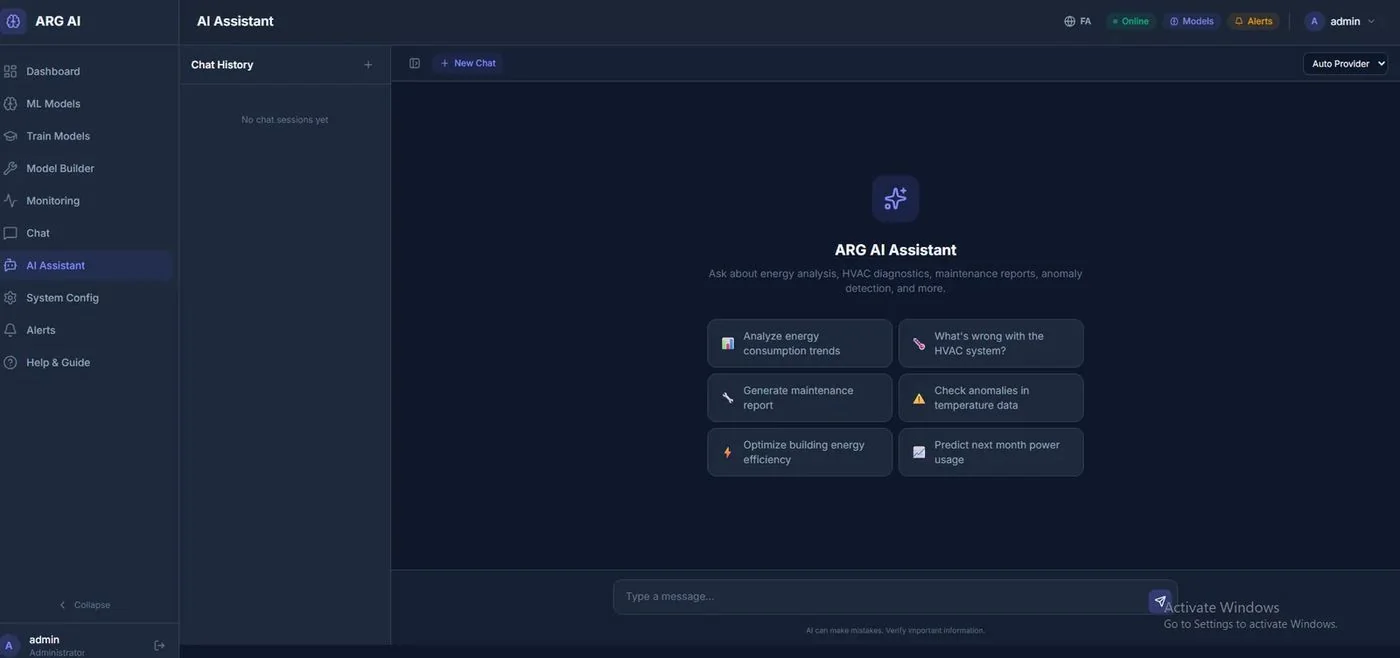
The project-connected assistant and the independent ARG_AI backend serve complementary roles: one helps users understand the situation and work inside the software; the other provides model training, analysis, prediction and result monitoring.
Prepare history → train models → predict and detect → evaluate and monitor
User intent → relevant knowledge and project tools → analysis or proposed change → user confirmation
A model is trained on equipment data, then analyses future trends or unusual behaviour.
Knowledge retrieval finds passages relevant to the question and equipment and supplies them to the assistant.
The assistant explains findings, summarises information and uses system tools to investigate the question.
Tools read equipment state, alarms and history; proposed creation or changes enter the user confirmation workflow.
RAG supplies relevant knowledge, the LLM interprets the request and results, and agent tools move the work forward inside the system.
The assistant draws on device catalogs, SNMP and Modbus templates, OIDs and uploaded project documents. RAG combines keyword and semantic retrieval to answer in the context of the relevant equipment.
A user request can become a proposal for buildings, floors, spaces, devices and points, or for dashboard creation and cloning, 2D elements, scenes and 3D objects. System tools and user confirmation carry out the workflow.
The assistant reads and checks existing logic and proposes creating or editing Rules, Limits, Scenarios, Scripts and State Machines. Command-producing logic starts disabled and requires a separate activation confirmation.
Conversation history, summaries and user or project memory help continue the work. Equipment aliases, preferences and routines can be retained, pinned or forgotten.
Ask the assistant to inspect active alarms, offline equipment or a point’s history. The request carries project context and tools read the required information from the system. Proposed changes are presented for user confirmation.
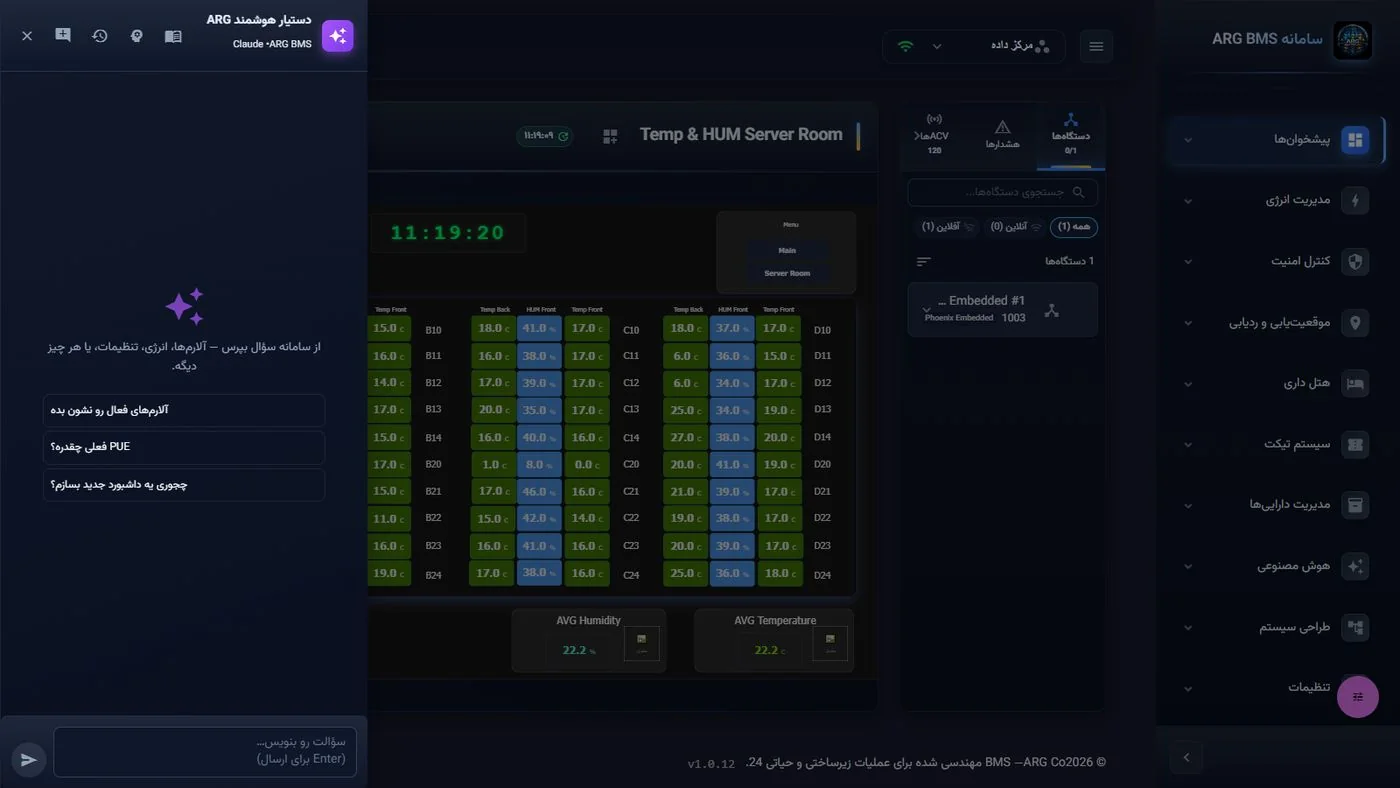
For energy forecasting, historical data trains the model; results are checked against test data and recorded with error metrics. Anomaly detection learns normal behaviour to identify observations that need investigation.
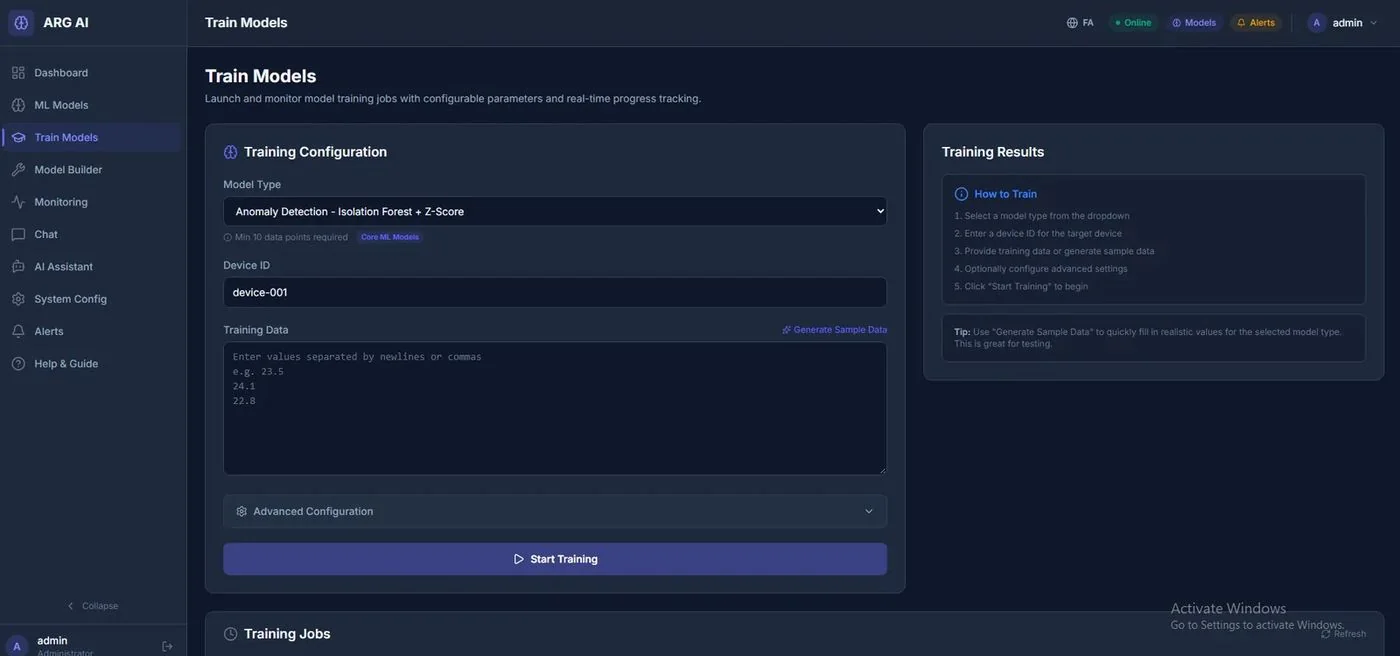
Equipment data becomes training features. Energy forecasting uses time windows and hour/day patterns.
Select a model type and device; training jobs, execution state and model versions can be tracked in ML management.
Energy forecasting separates training and test data and measures RMSE and MAE before the model is used for inference.
Review model health, latency, errors and drift; operations evaluates the result alongside actual equipment conditions.
For a refinery, petrochemical plant or other infrastructure, project engineering defines data sources, equipment mapping, history quality, permitted documents and acceptance criteria. The deployment guide describes OT/DMZ integration and local LLM or provider API options. In this industrial architecture, AI informs engineers and operators while process control remains in the existing control system.
A Persian-language assistant built on a large language model, with access to project data, that learns from the system itself and can act on the user's behalf — but never without confirmation. It is available on every page, and when the dashboard designer is open, it can see the canvas. It works with a primary language-model provider and a backup, and never accepts a tool's result from the model itself.

Conversations are kept on the server and compressed into a rolling summary; the assistant remembers facts, aliases, preferences, and routines for the user or project (pinning, forgetting).
The device catalog, SNMP/Modbus templates, common OIDs, the knowledge folder, and documents uploaded per project are indexed into 1,200-character chunks; hybrid keyword + semantic-vector search, with answers still available even when the vector service is unreachable.
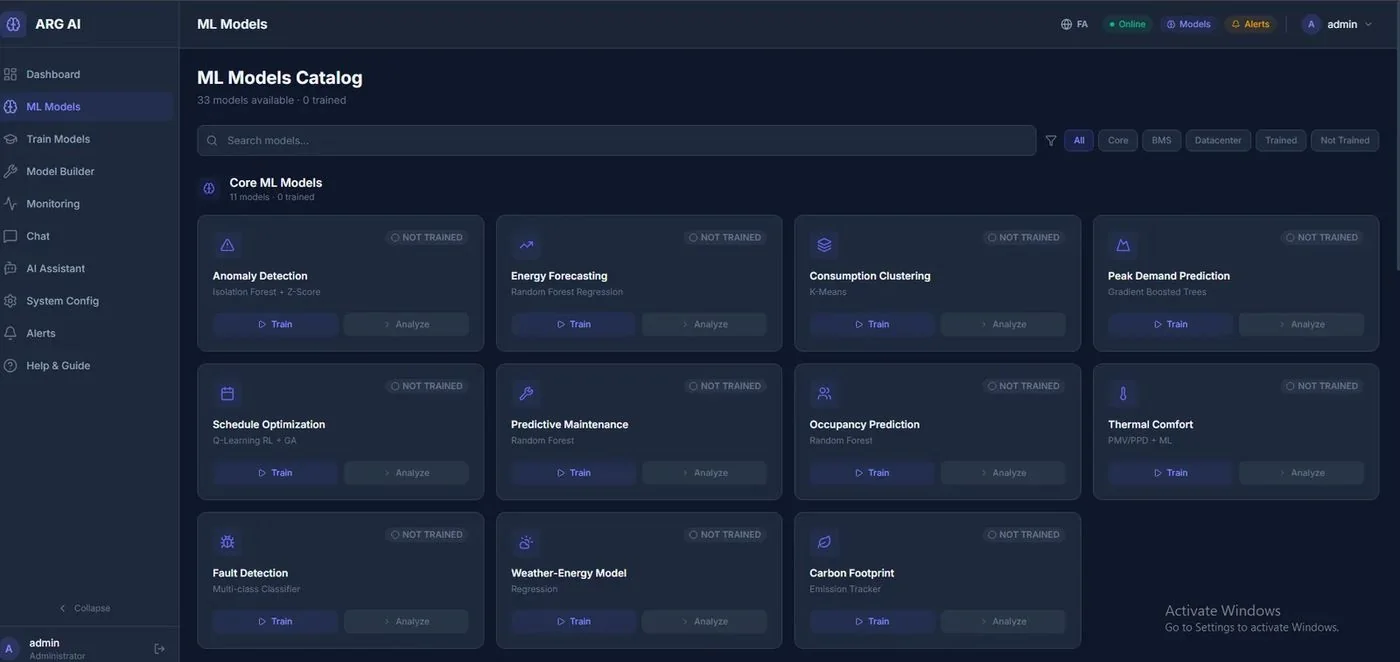
An independent machine-learning and analytics service for buildings and data centers that ingests twin data and produces forecasts, detection, optimization, and intelligent reports. It works with multiple language-model providers and can run entirely locally (offline, with a local language model). A full API with 145 documented operations.
| Domain | Models and Outputs |
|---|---|
| Energy | Consumption forecasting (Random Forest, LSTM), demand-peak forecasting and load shifting, demand response (tariff analysis, load scheduling, cost optimization), consumption-pattern clustering (K-Means) and classification of new patterns, weather-energy model and pre-cooling/pre-heating driven by weather forecasts, carbon footprint |
| Detection and Diagnostics | Single-sensor anomaly detection (Isolation Forest + Z-Score) and multivariate (cross-sensor correlation), fault detection and diagnosis (multi-class), predictive maintenance (failure forecasting), equipment health curve and remaining useful life, data-drift monitoring |
| Comfort and Operation | Occupancy prediction for HVAC/lighting, thermal comfort (PMV/PPD), equipment schedule optimization (Q-Learning reinforcement learning + genetic algorithms, DQN), integrated cost/comfort optimization across systems |
| Building Systems | Lighting management (daylight, occupancy, circadian rhythm), elevators (traffic prediction, wait time), water (leaks, consumption forecasting, pressure anomalies), fire safety (risk, smoke/CO₂ patterns), access control (entry/exit patterns, intrusion detection) |
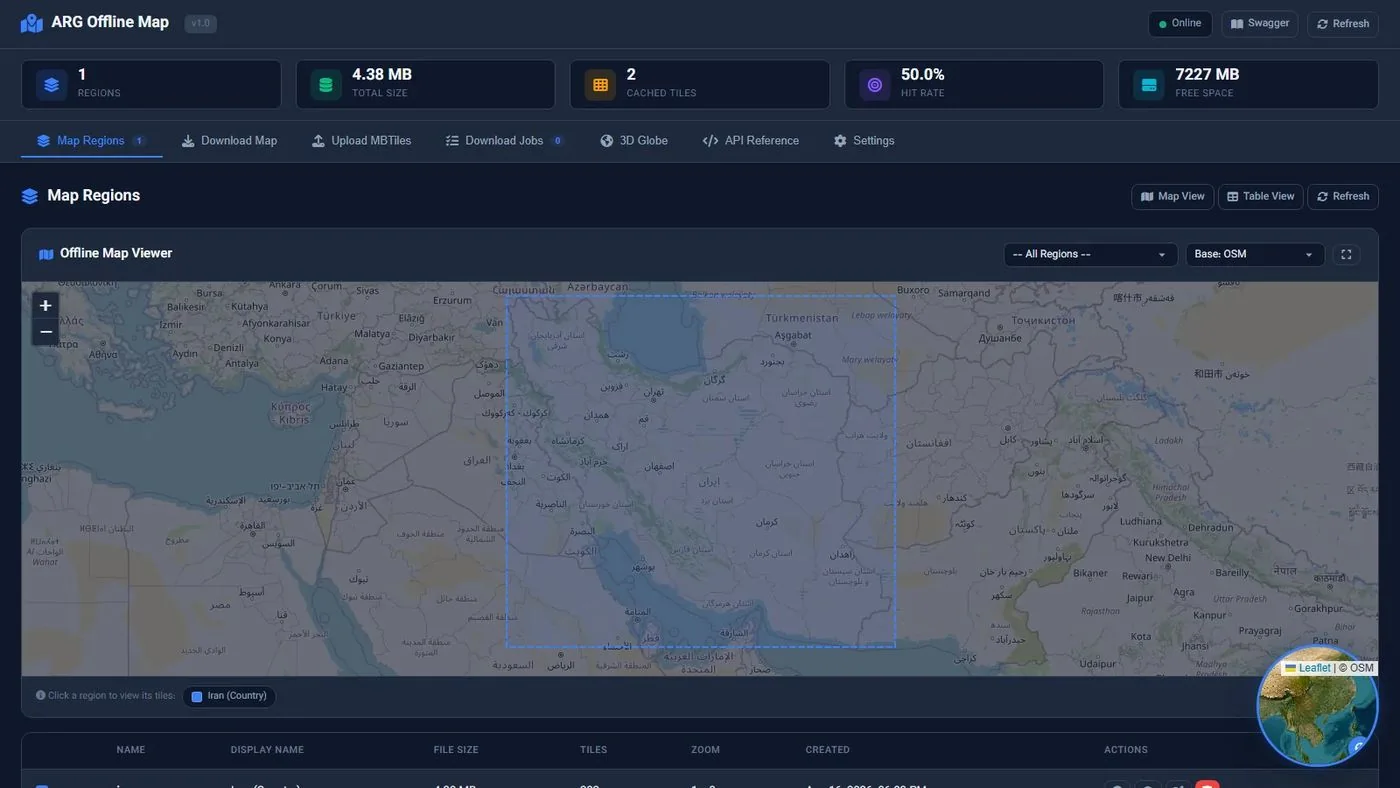
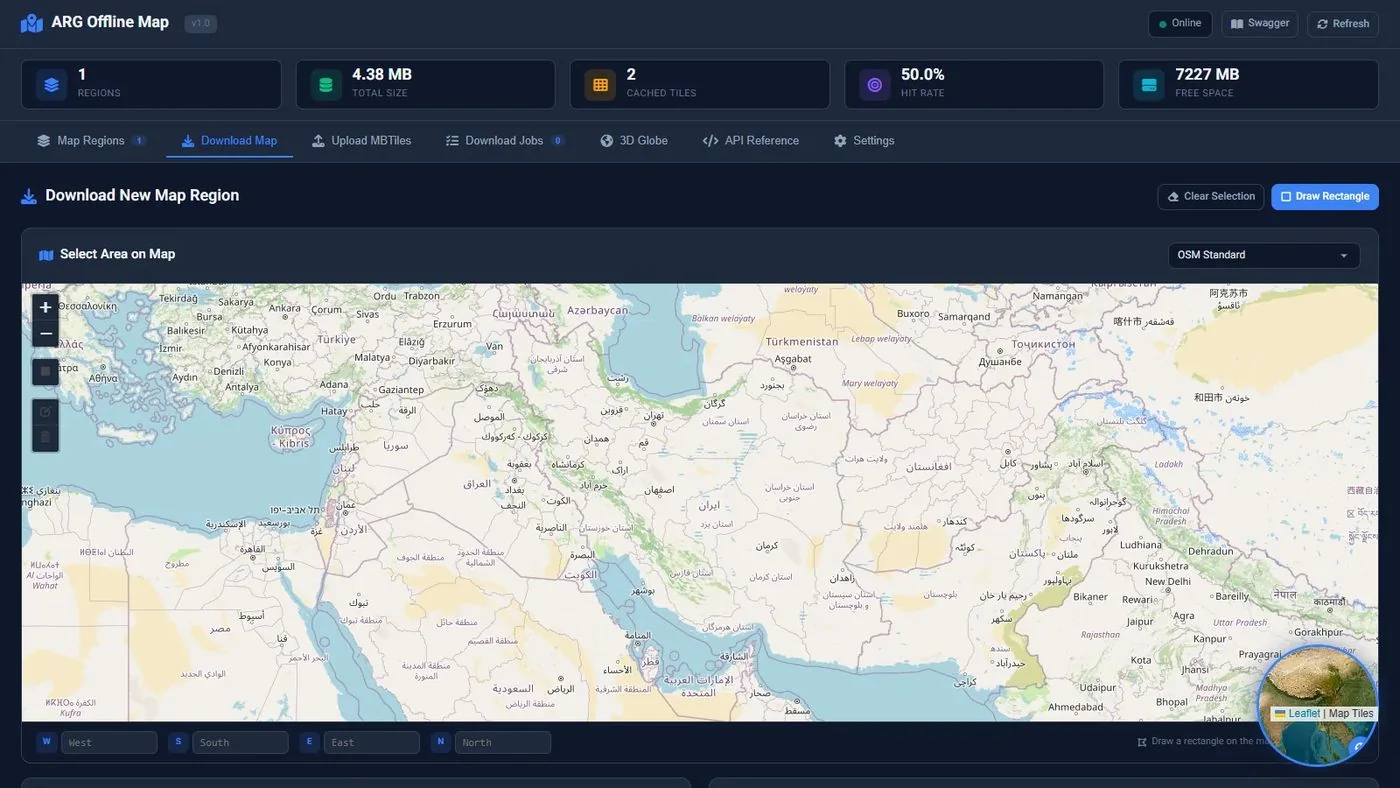
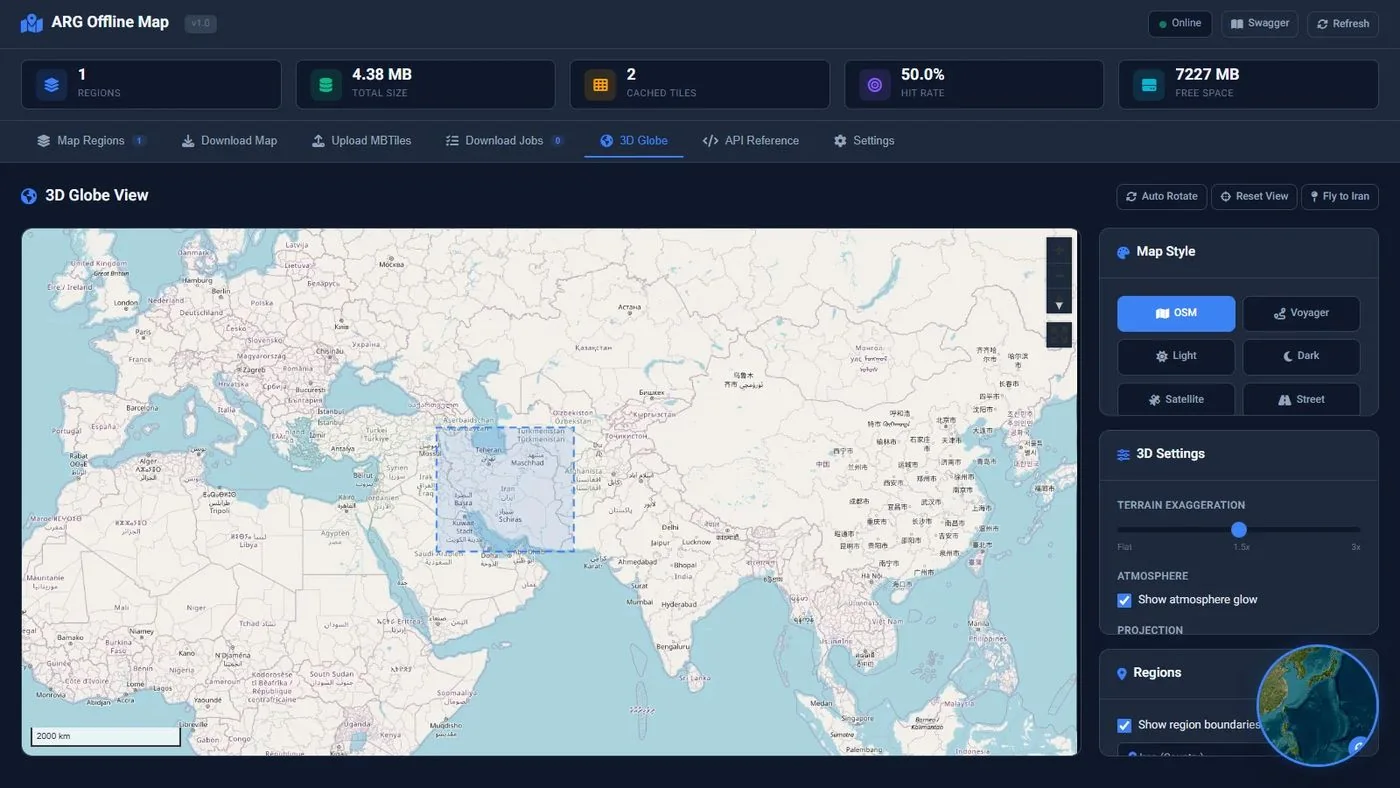
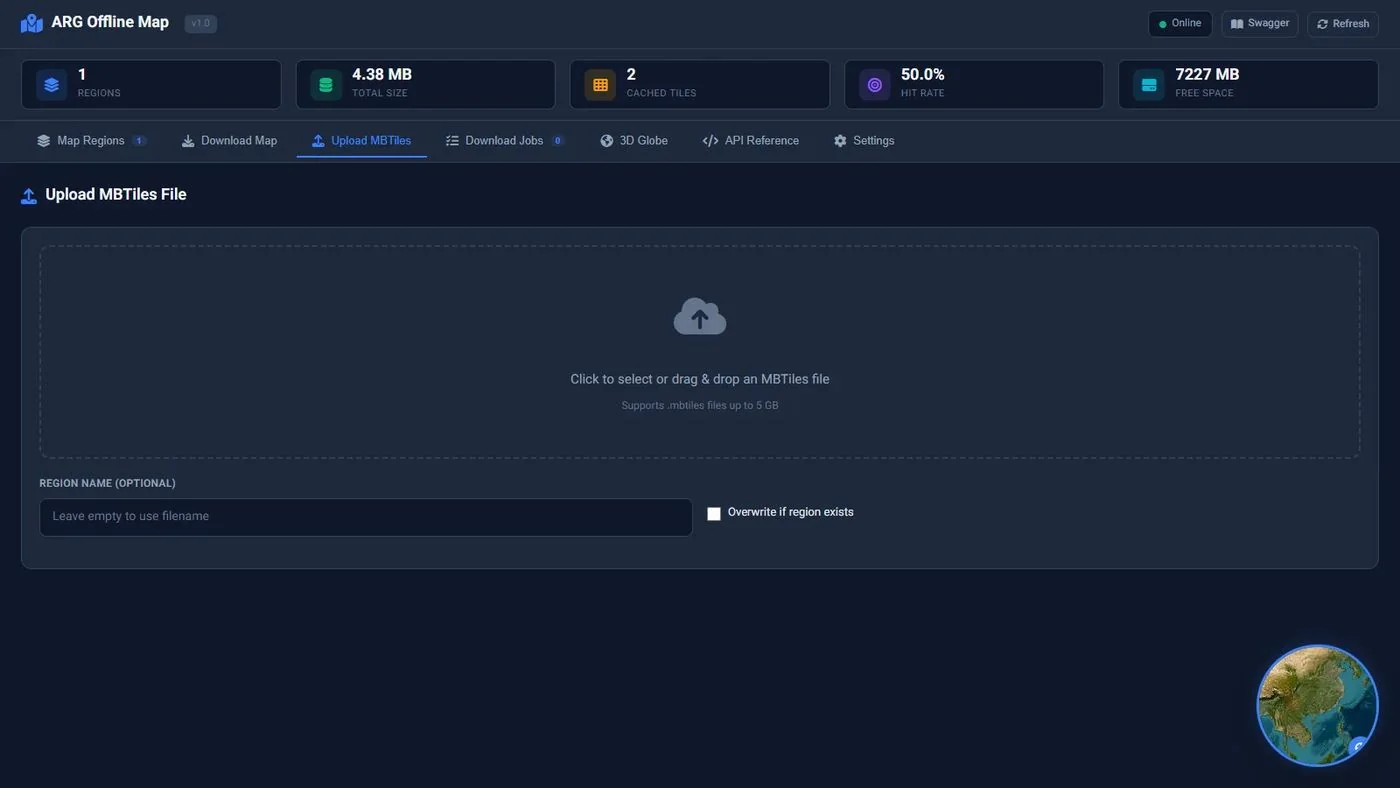
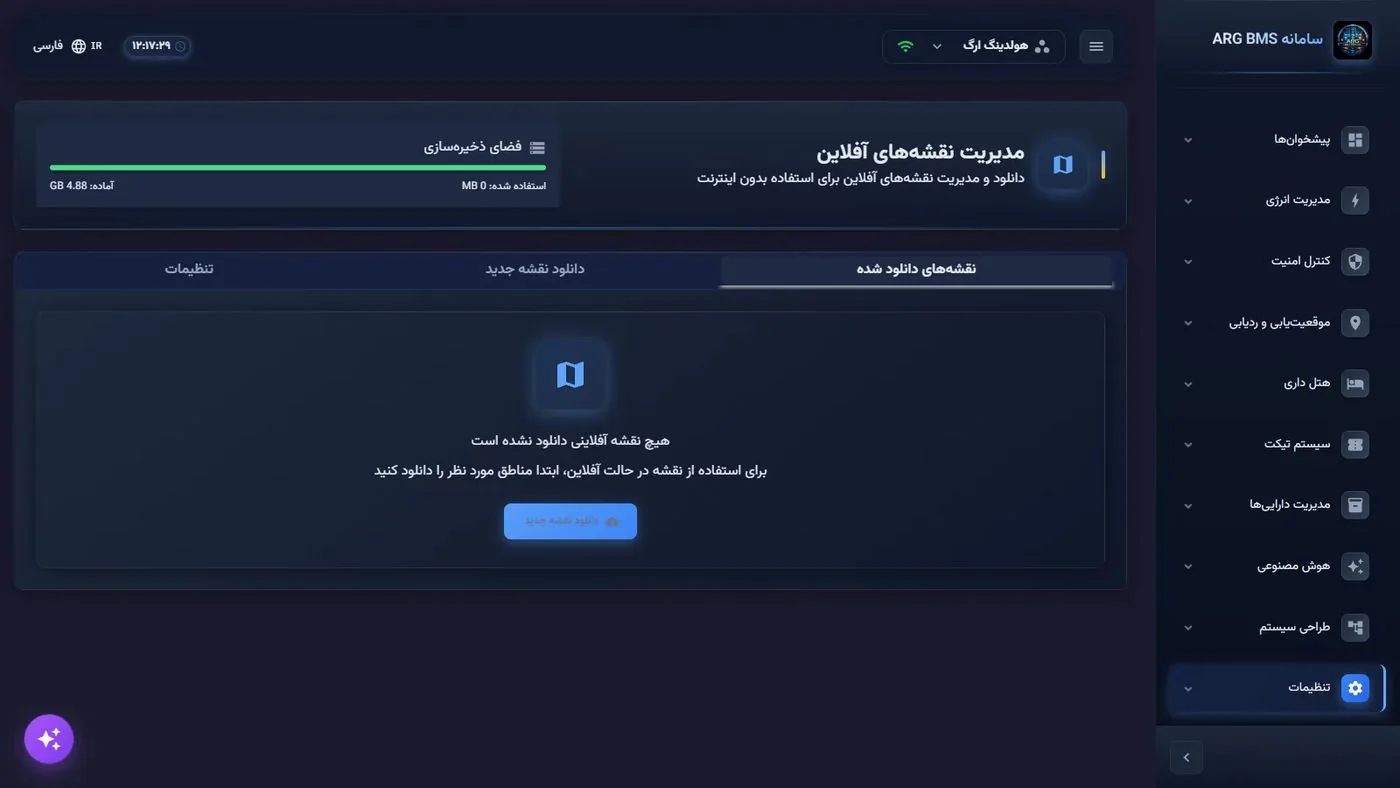
Many industrial, military, and infrastructure sites have no internet access, or must not have any. The ARG Offline Map server keeps map tiles inside the customer's network and serves the system's map dashboards, site views, asset tracking, and fleet tracking — with no external dependency.
The live ArgBMS demo with real 3D twins, dashboards and logic.